There’s a magical moment that happens during almost every cannabis experience.
At first, everything is fine. You’re relaxed. Maybe music sounds incredible. Maybe you suddenly become deeply invested in the texture of your hoodie.
Then your brain whispers:
“Wait… how long is this supposed to last?”
And just like that, the clock becomes your enemy.
You check the time once. Then again eight minutes later. Then you somehow convince yourself an entire geological era has passed because your microwave says 9:14 and you swear it said 9:13 twenty minutes ago.
Cannabis does strange things to time perception. But the good news is this: most highs follow fairly predictable timelines once you understand how different consumption methods work.
And honestly? Knowing what’s normal can instantly make cannabis feel far less intimidating.
Why Cannabis Feels Different Every Time
One of the biggest misconceptions about cannabis is the idea that every high behaves the same way.
It doesn’t.
A few puffs from a joint can create a short, manageable experience. Meanwhile, a strong edible can feel like your evening got extended into a director’s cut nobody warned you about.
That’s because cannabis changes dramatically depending on:
This is why two people can take the exact same edible and have completely different nights. One person quietly falls asleep during Netflix. The other spends 40 minutes convinced their ceiling fan is somehow judging them.
The method matters. A lot.
Smoking Cannabis: Fast, Intense, and Usually Shorter
Smoking is the classic cannabis experience for a reason: it’s fast.
THC enters your bloodstream through the lungs almost immediately, which means you’ll usually feel something within minutes.
For most people:
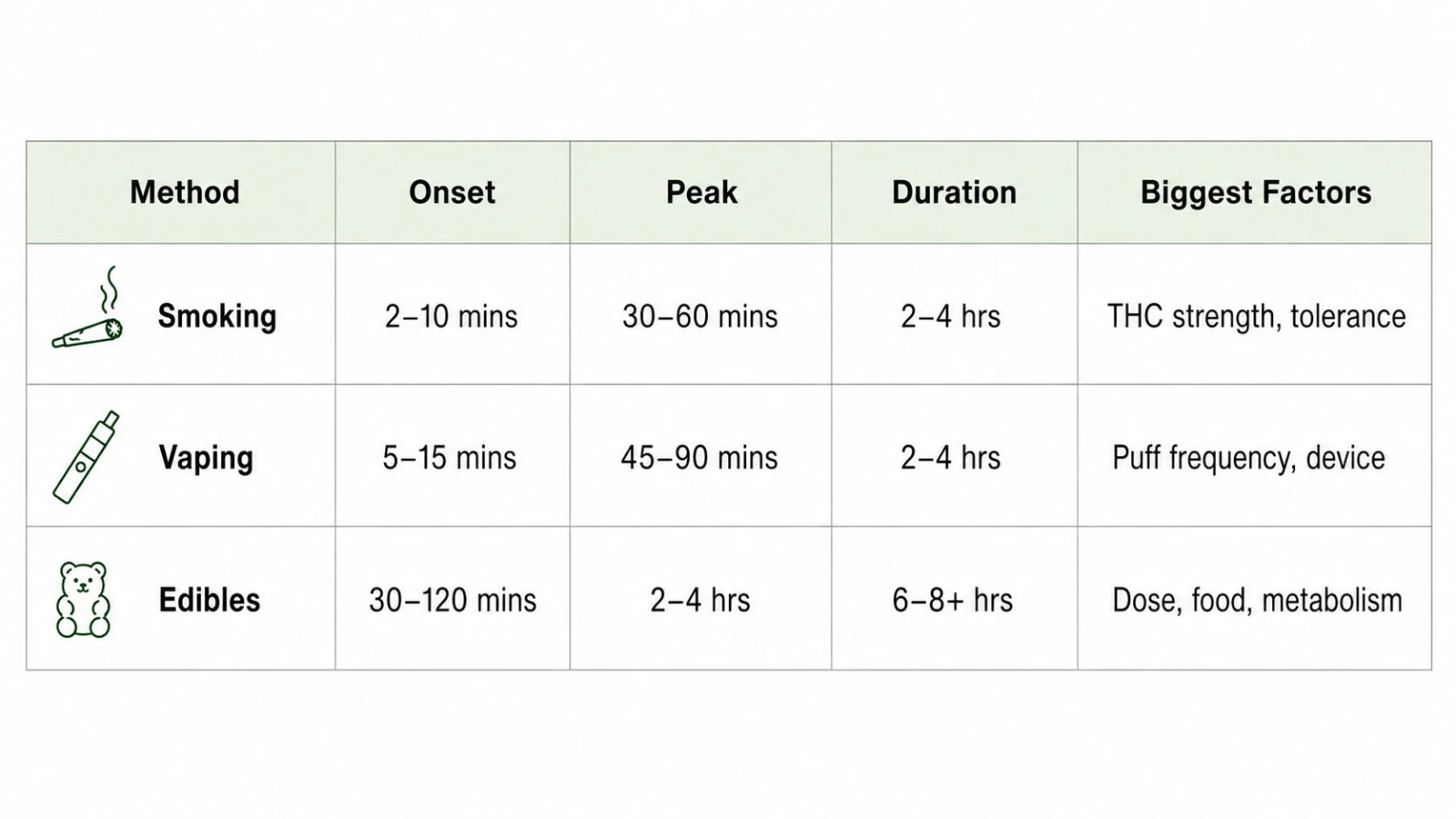
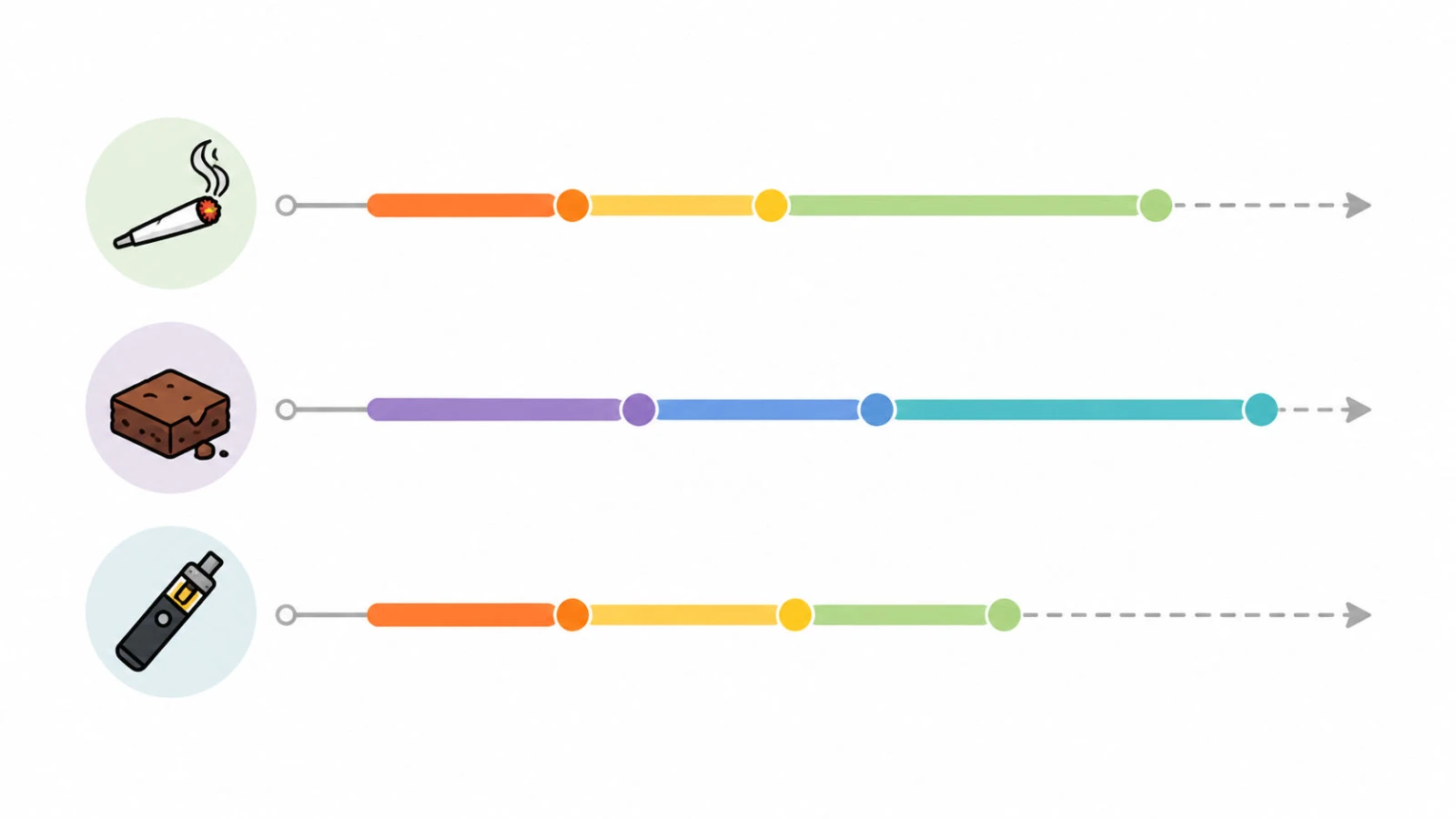
onset happens within 2–10 minutes
peak effects arrive around 30–60 minutes
the high fades after roughly 2–4 hours
This quick feedback loop makes smoking easier to control than edibles. You know fairly quickly whether you’ve had enough.
But there’s a catch.
Many people mistake the beginning of the high for the final intensity. They feel a light buzz, think “I barely feel anything,” then smoke more… right before the first wave fully arrives.
That’s how you accidentally end up staring at a slice of pizza like it contains ancient wisdom.
If you’re curious how smoking compares to vaping overall, CannaRadar’s guide on
smoking vs vaping cannabis breaks down the experience in more detail.
Vaping Cannabis: The Sneaky One
Vaping often feels smoother than smoking, which is exactly why people underestimate it.
Most vape highs:
Sounds straightforward, right?
Here’s the problem: vaping makes it very easy to keep going.
A puff here. Another there. One more because the mango flavour tastes suspiciously like vacation.
Then suddenly you realize the previous six puffs have been quietly assembling themselves into a much larger high behind the scenes.
This is called stacking — when repeated hits build on top of each other before your body fully processes the earlier ones.
It’s one of the most common reasons vape highs feel unexpectedly strong.
The solution is painfully simple and almost universally ignored:
Wait between puffs.
Seriously. Give your brain time to catch up before turning yourself into a science experiment.
Edibles: The Long-Distance Runner
Edibles are the reason the phrase “these edibles ain’t sh—” has become a legendary final sentence.
Unlike smoking or vaping, edibles must pass through digestion before THC reaches the bloodstream. That process takes time.
Usually:
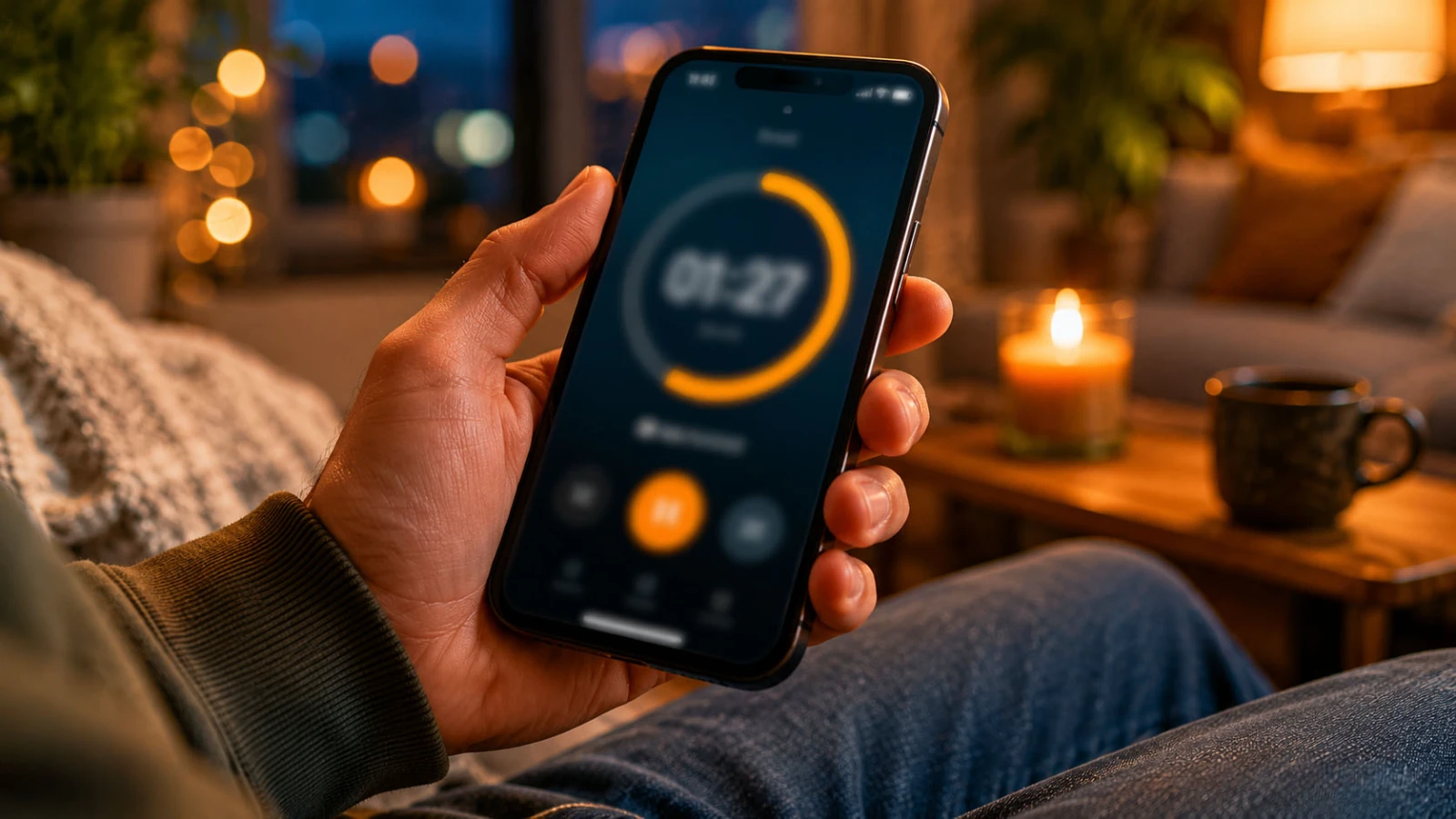
onset takes 30–120 minutes
peak effects happen around 2–4 hours
total duration lasts 6–8 hours or longer
This delayed timeline tricks people constantly.
Nothing happens for an hour, so they assume the edible “didn’t work.” Then they take another one. Then suddenly both doses arrive together like two UFC fighters kicking open the same door.
Edibles also hit differently because the liver converts THC into 11-hydroxy-THC, which many people experience as stronger and longer-lasting.
This is why patience matters enormously with edibles.
If you’re new to cannabis, reading CannaRadar’s
beginner dosage guide before experimenting with edibles is one of the smartest things you can do.
Smoking vs Vaping vs Edibles
What Actually Changes How Long a High Lasts?
Here’s where cannabis becomes deeply unfair.
Two people can consume the same product and experience wildly different timelines because the body is involved — and bodies are chaotic little chemistry labs.
THC Strength and Dose
This one matters most.
Higher THC products generally:
hit harder
peak longer
linger longer afterward
And no, strain names aren’t reliable indicators of intensity anymore. “Purple Galactic Thunder Punch” tells you absolutely nothing useful scientifically.
Pay attention to actual THC numbers and dosage instead.
Tolerance
Frequent cannabis consumers usually experience shorter, milder highs because their bodies adapt over time.
Meanwhile, beginners often feel effects much longer — sometimes dramatically longer.
This is why experienced users casually say things like:
“Oh this edible is pretty mild.”
…right before their friend spends two hours emotionally negotiating with a bag of tortilla chips.
Food, Metabolism, and Alcohol
Food changes edible timing more than people realize.
Eating beforehand often:
Alcohol complicates things further. Mixing alcohol and cannabis can intensify effects unpredictably and make highs feel significantly stronger.
Translation:
Wine plus edibles is not always the sophisticated evening people imagine.
Common Mistakes That Make Highs Feel Endless
Almost every uncomfortable cannabis story involves one of these:
taking more too soon
mixing cannabis with alcohol
assuming vaping is automatically “lighter”
panicking and hyper-focusing on sensations
underestimating edibles
Ironically, anxiety itself stretches time perception. A calm high feels shorter than an anxious one.
That’s why mindset matters more than people think.
What To Do If It Feels Too Intense
First: you are almost certainly going to be okay.
A high can feel overwhelming without being dangerous.
The best thing you can do is stop fighting the experience and let time do its job.
Helpful moves:
And maybe stop Googling:
“Can you permanently become a grilled cheese sandwich from THC?”
If you need more practical advice, CannaRadar’s guide on
what to do if you get too high walks through it calmly and realistically.
“Will I Be Okay in Time?” Checklist
✔ Did I smoke or vape instead of taking an edible?
✔ Was the dose small or familiar?
✔ Have I eaten and had water recently?
✔ Am I somewhere safe and comfortable?
✔ Can I sleep if needed?
If most answers are yes, there’s an extremely good chance the experience will fade naturally with time.
Feeling High vs THC Staying in Your System
One thing people confuse constantly:
Feeling high is not the same thing as THC remaining detectable in the body.
Most people stop feeling intoxicated long before THC metabolites fully leave their system. Detection windows depend on frequency of use, body chemistry, and testing methods — not whether someone still feels high.
WebMD has a useful breakdown explaining how THC detection works:
https://www.webmd.com/mental-health/addiction/what-to-know-about-how-long-marijuana-stays-in-your-system
And if you run into unfamiliar cannabis terms while researching products, the
CannaRadar Cannabis Glossary explains everything in plain English without sounding like a chemistry textbook.
Final Thoughts
Cannabis highs don’t last forever — even when they temporarily feel like they’ve entered a multiverse expansion pack.
Smoking and vaping usually fade within a few hours. Edibles last much longer and require more patience. And almost every uncomfortable cannabis experience becomes easier once you understand what’s happening.
The goal isn’t to consume the strongest possible product. It’s understanding your timing, knowing your limits, and creating an experience that actually feels enjoyable instead of overwhelming.
And if you’re exploring cannabis products or delivery options across Canada, CannaRadar’s dispensary and delivery listings can help you browse more confidently — without the confusion, pressure, or guesswork.