A good first session is planned, not improvised.
Dosing cannabis isn’t a bravery contest; it’s closer to learning espresso shots. Start tiny, notice what changes, and only then add more. This guide gives you clear, beginner-safe ranges by method, simple redose rules, and a calm “oops-I-had-too-much” playbook—so curiosity never becomes chaos.
The One-Minute Answer (Bookmark This)
Inhalation (smoke or dry-herb vape): 1 small puff. Wait 10 minutes. Optional second puff.
Edibles: 1–2.5 mg THC to start. Wait 2 hours before more.
Sublingual oils/tinctures: 1–2 mg THC (or 5–10 mg CBD if THC-sensitive). Hold under tongue ~60 seconds.
Topicals: Usually local, non-intoxicating—no “dose” in the headspace sense.
Golden rule: Start low, go slow. Your endocannabinoid system is uniquely yours; the right dose is the one that feels good for you.
Why “Too Much” Happens (and How to Prevent It)
Timing: Edibles take 30–120 minutes to appear and peak at 2–4 hours—people get impatient and double up.
Expectations: Alcohol tolerance ≠ cannabis tolerance.
Labels ignored: Chasing strain names instead of THC/CBD amounts and serving size.
Mixing methods: “Just a gummy after a few puffs” stacks effects. Save that for later experiments.
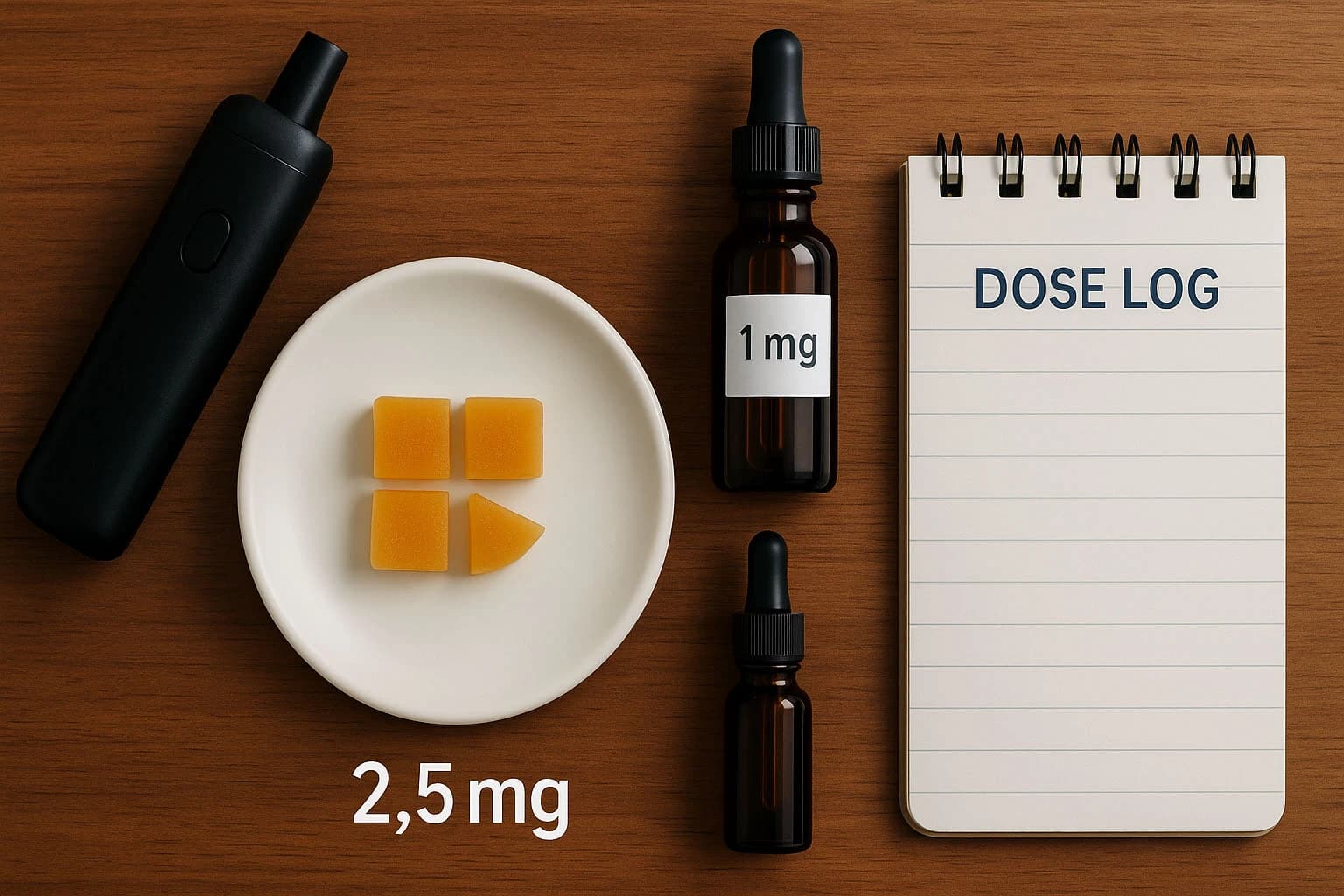
Prevention is simple: pick one method, set a timer, and log your dose + time + feel. (Yes, a two-line note in your phone counts as a log.)
How Much Is Too Much?
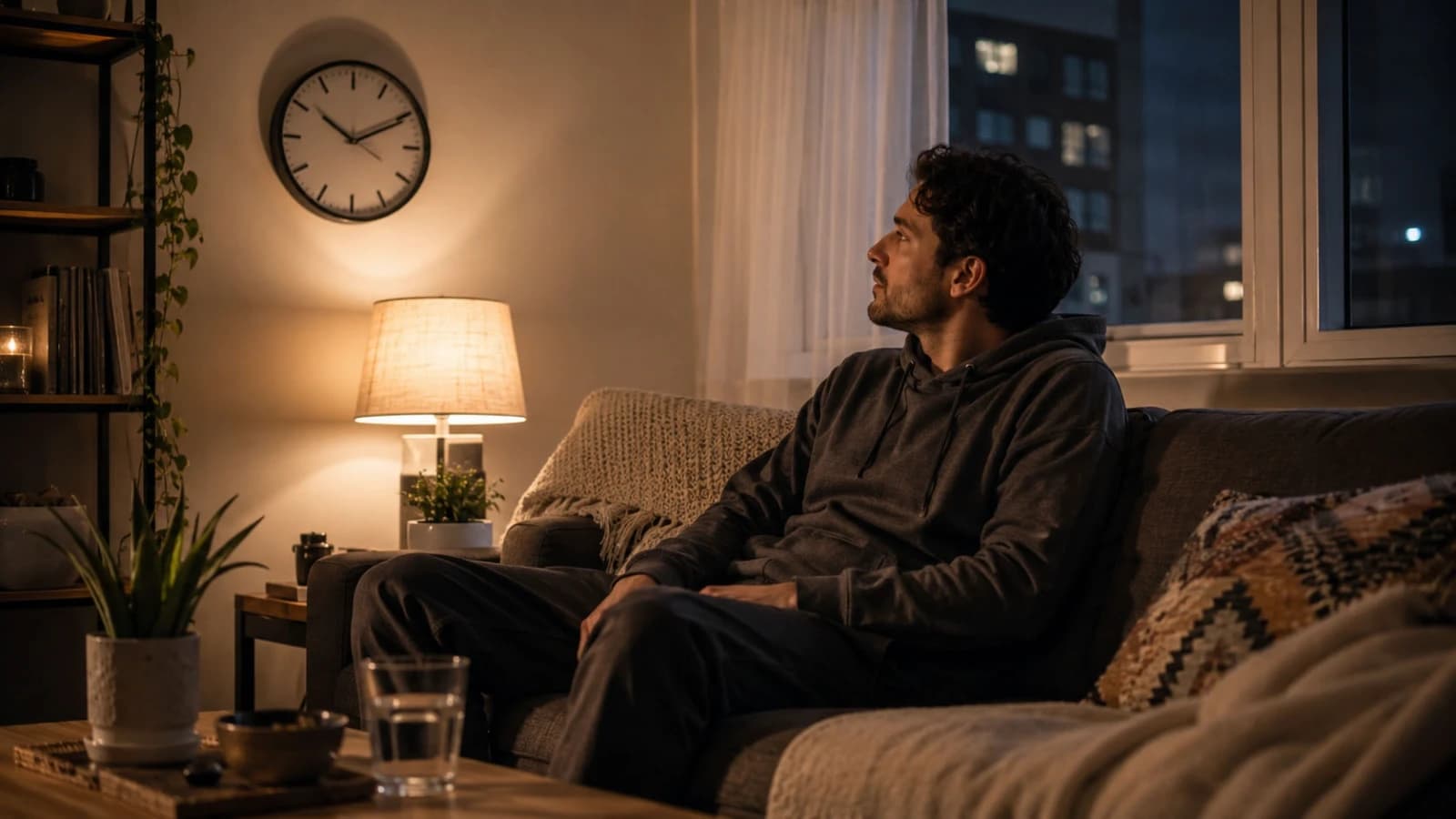
“Too much” is not a single number; it’s a pattern: racing heart, unease or anxiety, dizziness, dry mouth, over-focus on bodily sensations, and “time dilation” (minutes feel like hours). It’s uncomfortable, not dangerous in healthy adults, and it passes.
If you cross the line:
Hydrate (water or tea).
Breathe slowly: 4-second inhale, 6-second exhale, repeat for 2 minutes.
Change the scene: softer light, comfy seat, quiet music, fresh air.
CBD can help some people: 10–20 mg CBD may smooth an edgy THC experience.
Wait it out. Effects have a ceiling; time is your friend.
Light humor, true story: No one ever wrote “Best night of my life” after their third edible at the 45-minute mark. Be the person with tomorrow’s brunch plans, not today’s regrets.
Dosing by Method (Beginner-Friendly Ranges)
1) Inhalation (Smoking or Dry-Herb Vaping)
Why choose it: Fast feedback; easy to “sip” effects.
How to dose: Take one small puff, wait 10 minutes. If you still want more, take a second puff.
How it feels: Onset 2–10 min, peak ~15–45 min, total 2–4 h.
Pro tips:
Vaping dry flower is often smoother than smoke.
If a friend rolls, you still control your puff count. Etiquette ≠ overconsumption.
2) Edibles (Gummies, Chocolates, Drinks)
Why choose it: Long, steady body feel; discrete.
Beginner dose: 1–2.5 mg THC. (Yes, that low.)
Timing: Onset 30–120 min; peak 2–4 h; total 4–8 h (sometimes longer).
Redose rule: Do not redose before 2 hours.
Pro tips:
If a gummy is 10 mg, cut it into quarters.
A normal meal before dosing smooths absorption; very fatty meals can increase intensity.
3) Sublingual Oils/Tinctures
Why choose it: More precise than edibles; gentle ramp.
Beginner dose: 1–2 mg THC (or 5–10 mg CBD if THC-shy).
How to use: Drop under tongue; hold ~60 seconds; swallow.
Timing: Onset 20–45 min; duration 4–6 h.
Pro tips: Start a little earlier in the evening than you think—you can always top up later, not earlier.
4) Topicals (Creams/Balms)
Why choose it: Localized comfort; generally non-intoxicating.
Dose guidance: Apply a thin layer to the area; avoid broken skin; wash hands.
Expectation: Relief can be subtle; don’t expect a head change.
Image: “Dose Spectrum” Cheat Sheet
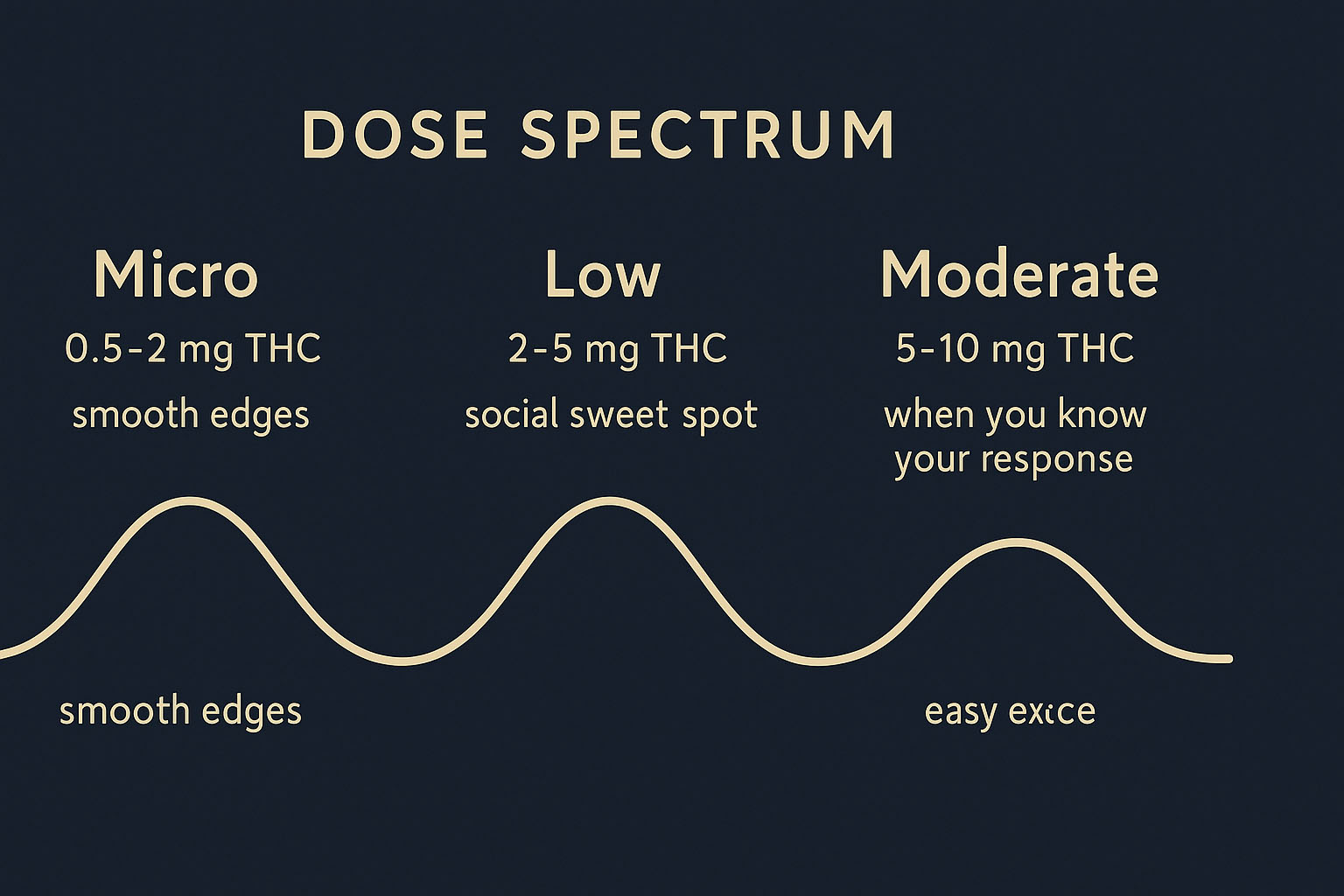
Micro keeps the edges smooth; low is the social sweet spot; moderate is for when you know your response.
Matching Dose to Goal (Use These Mini-Playbooks)
Goal: Unwind Without Couch-Lock
Pick: Balanced 1:1 THC:CBD or CBD-dominant product.
Dose: 1–2 mg THC with 5–10 mg CBD.
Method: 1 small puff or a micro-edible.
If you want more: add 1 mg THC (oil) or one tiny puff after 30–60 min (inhalation) / 2 h (edible).
Goal: Mild Daytime Lift
Pick: Low-THC option with bright terpenes (limonene/pinene).
Dose: 1 mg THC (oil) or one small puff; consider adding a little CBD.
Watch for: Edginess = lower THC next time or add CBD.
Goal: Sleep Support
Pick: Indica-leaning profile with myrcene/linalool.
Dose: 1–2.5 mg THC (oil or edible).
When: 60–90 minutes before bed; try first on a weekend to learn your response.
Avoid: “More must be better” thinking—the goal is ease into sleep, not erase tomorrow.
Goal: Body Comfort, Clear Head
Pick: CBD-dominant product (10–20 mg CBD) with ≤1–2 mg THC.
Method: Sublingual oil; consider topical for local support.
The “Do Not Redose Yet” Rule (And Why It Works)
Inhalation: If you feel nothing at 5 minutes, that’s… expected. Most people need 10+ minutes to judge.
Edibles: Your digestive system is not Amazon Prime. Two hours lets the first dose declare itself before you stack a second.
Oils: Give it 45–60 minutes before adding a tiny top-up.
Remember: every redose restarts the clock.
Label Literacy: Read This, Not Just the Name
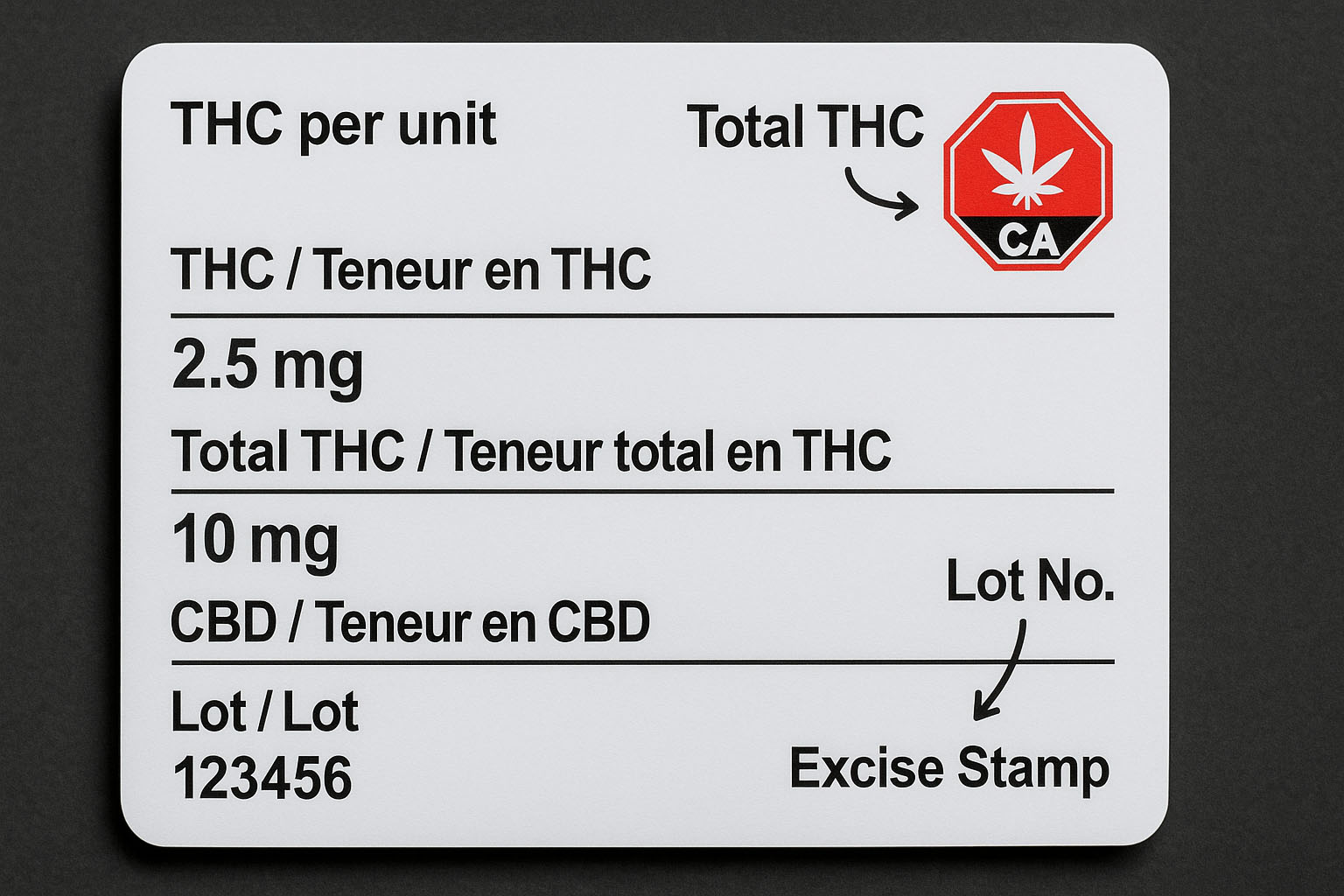
What to scan instantly:
THC per serving and total per package (edibles/oils).
Total THC % (flower) + pack date (freshness).
CBD amount—helps shape the feel.
Edibles cap (Canada): Legal edibles are limited to 10 mg THC per package—great for beginners who split doses.
Factors That Change Your Dose (Even When Product Stays the Same)
Sleep & stress: Tired or anxious? You may feel effects faster and stronger.
Food: Heavy, high-fat meals can increase the intensity of edibles.
Caffeine & alcohol: Caffeine can add jitter; alcohol increases impairment—skip mixing.
Medications & health: If you take prescription meds or have medical/mental-health conditions, talk to a clinician first.
Tolerance & frequency: Effects fade with frequent use. Beginners benefit from rest days between sessions while learning.
A Simple First-Week Dosing Plan (Copy/Paste)
Day 1 – Inhalation test
1 small puff of dry-herb vape or a tiny joint.
Check-ins: 10 min, 30 min, 90 min.
Log: mood, body feel, any negatives (e.g., dry mouth, head rush).
Day 3 – Oil test
1 mg THC + 5–10 mg CBD sublingual.
Check-ins: 45 min, 90 min, bedtime.
Day 5 – Edible micro-test
1–2.5 mg THC (quarter a 10 mg gummy).
Do not redose before 2 hours.
Check-ins: 2 h, 4 h, bedtime.
Day 7 – Best-fit repeat
Pick the method/dose you liked most and repeat it once.
Adjust one variable only (time, setting, or +1 mg THC).
If any day felt unpleasant, step down next time or add CBD.
Image: Calm-Down Kit (for “Too Much” Moments)

You won’t need it often—but you’ll feel invincible knowing it’s there.
What About “Microdosing”?
Microdosing aims for sub-perceptual support—benefit without obvious intoxication.
THC micro range: 0.5–2 mg.
How to use: Take once, then repeat daily or every other day at the same time for a week before judging.
Good for: Work-night wind-downs, social ease, or “edge smoothing” without a “high.”
Common Myths (Briefly Debunked)
“Higher THC is always better.” For creativity, socializing, or sleep, lower often wins.
“Indica = sleep for everyone.” Helpful shorthand, not a law. Dose and chemistry still rule.
“I’m a big person; I need more.” Body size predicts less than experience, method, and timing.
“Edibles didn’t work so I took two more.” They worked; time lagged. Set a timer, not a trap.
Safety & Compliance Notes (Canada-Focused)
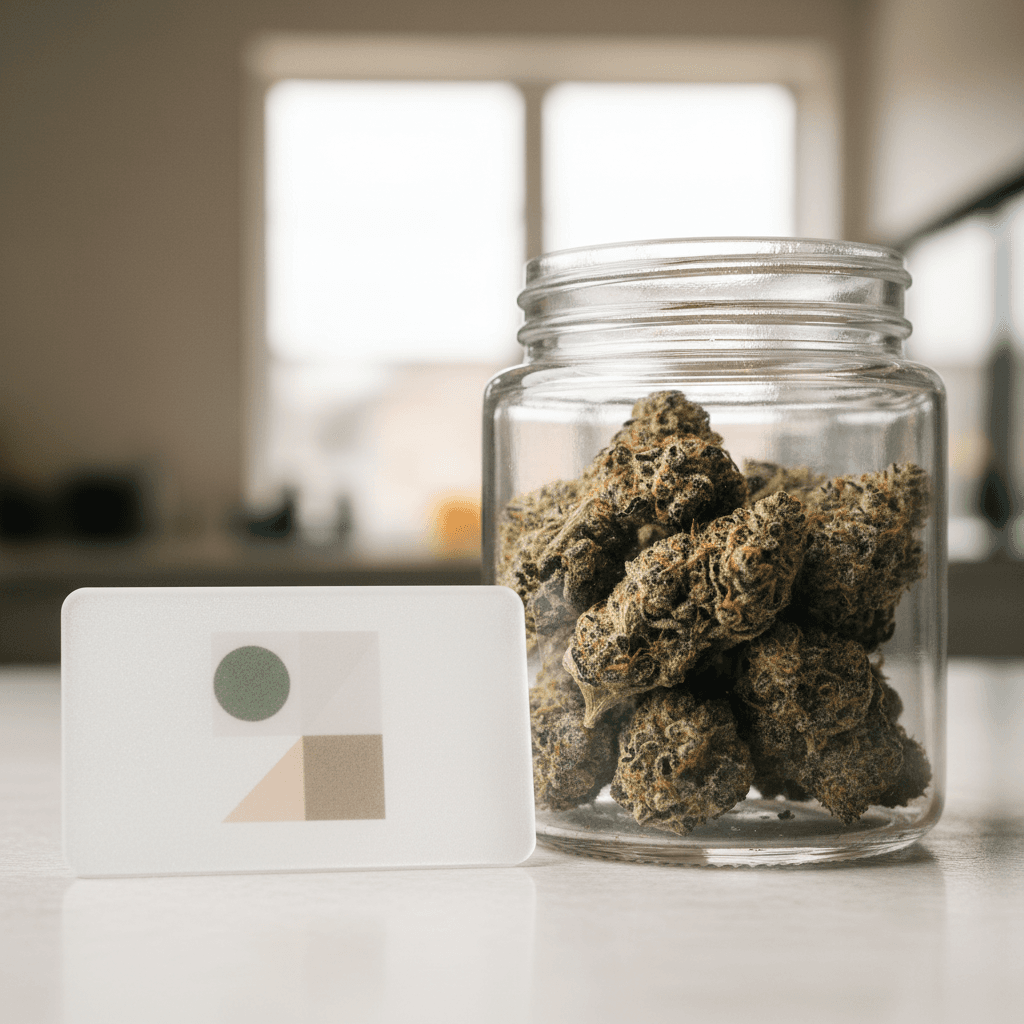
Purchase from licensed retailers only; expect age/ID checks and plain packaging with an excise stamp.
Never drive impaired. Plan rides or stay home.
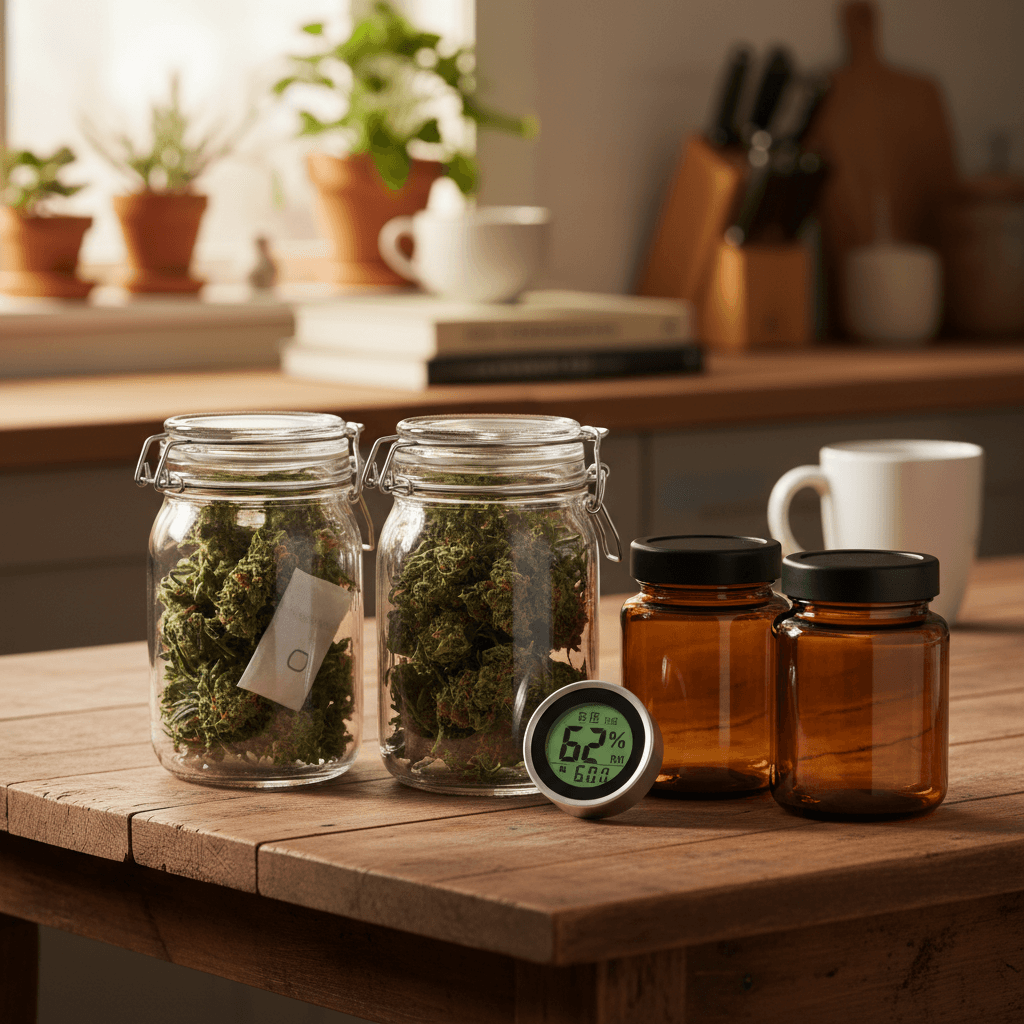
Store products locked, labeled, and out of reach—especially edibles.
Bottom Line
The right cannabis dose is the smallest amount that achieves your goal—relax, focus, sleep, or body comfort—without side effects. Start microscopic, give time a chance to do its job, and change only one variable per session. Two or three thoughtful experiments beat twenty wild guesses every time.
Suggested Image Files (drop into your media folder)
/media/green-guide/cannabis-dosage/hero.jpg— flat-lay with 2.5 mg edible quartered, dry-herb vape, dropper, “Dose Log.”/media/green-guide/cannabis-dosage/dose-spectrum.jpg— minimalist “Micro / Low / Moderate” spectrum graphic./media/green-guide/cannabis-dosage/label-explainer.jpg— annotated label (THC per unit, total THC, CBD, lot, excise stamp)./media/green-guide/cannabis-dosage/calm-down-kit.jpg— water, snack, CBD 10 mg, eye mask, 10-minute timer.
Editor’s note: This article supports responsible adult use and is educational, not medical advice. Always follow your local laws and your product’s label directions.