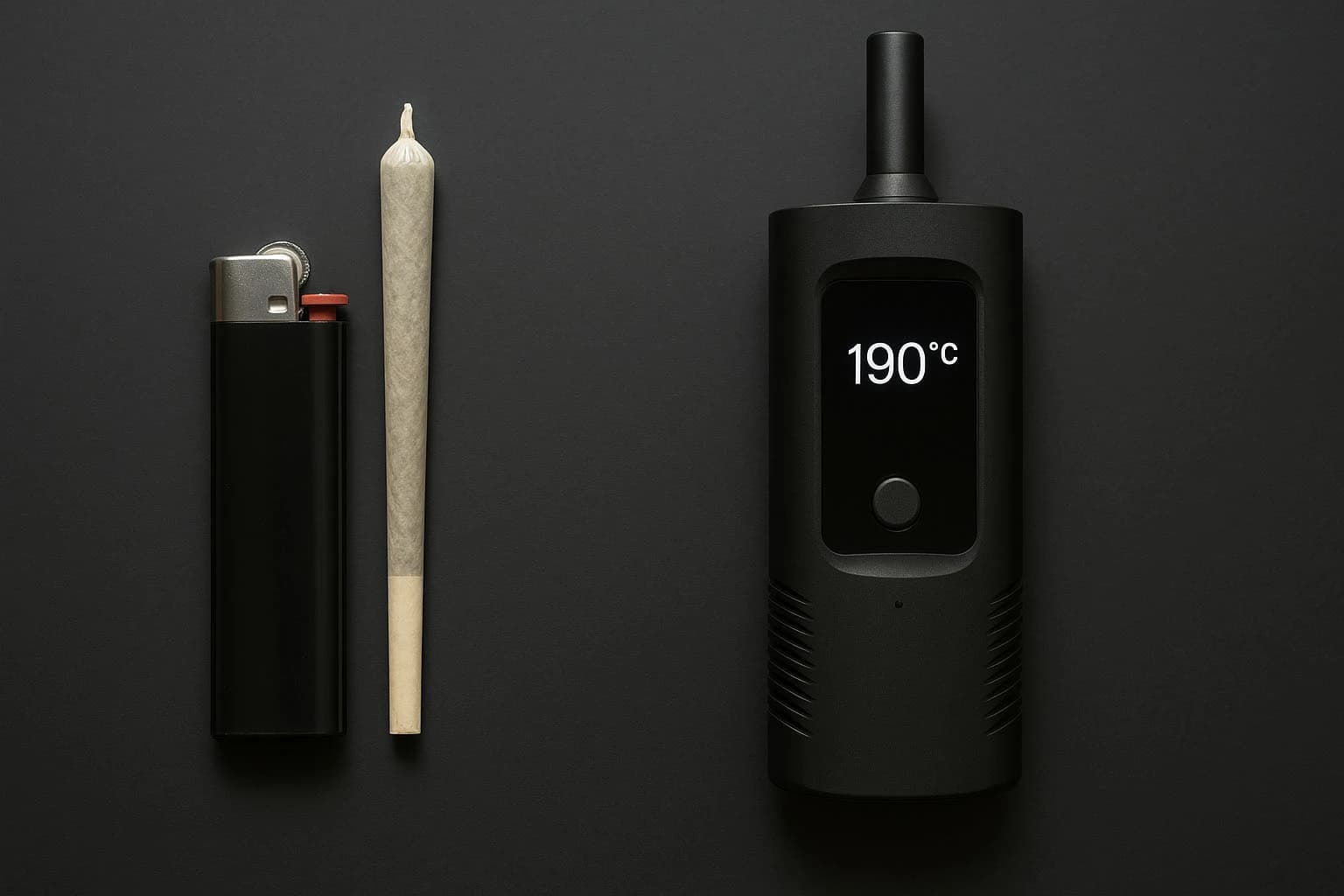
Two roads, one plant. Which route fits your body, budget, and vibe?
If you’ve ever argued with a friend about joints vs vapes, you already know: people have preferences. This guide drops the fanboy energy and compares health, cost, and overall experience—so you can choose with facts, not peer pressure.
The 30-Second Verdict
Health: Vaping dry flower (no additives) avoids combustion by-products and can be a lower-exposure option compared with smoking. Smoking still delivers effects, but also smoke.
Cost: Joints are cheap to start, pricier over time. Dry-herb vapes cost more upfront but often use 20–40% less flower for the same perceived effect.
Experience: Smoking hits fast, feels ritualistic, and smells… obvious. Vaping is gentler on the throat, more flavour-forward, and far more discreet.
If you love the ceremony and don’t mind the smell, smoking is fine with sensible habits. If you want cleaner flavour, more efficiency, and less odour, vaping wins.
Health: What Your Lungs Actually Meet
Smoking = combustion. Burning plant material produces familiar smoke markers (hot gases, particulates, tar). That’s what your throat feels on a big rip.
Vaping (dry herb) = controlled heating (typically 170–210 °C / 338–410 °F) to release cannabinoids and terpenes without lighting anything on fire. No burning, far less harshness, and a different chemical profile than smoke.
Practical takeaways (harm-reduction first):
If you smoke, prefer small puffs, avoid deep, long holds (they don’t “increase absorption”—they increase irritation), and don’t mix with tobacco. A glass filter tip or clean pipe helps.
If you vape, stick to dry flower in reputable devices. Keep temps <200 °C for terpene-forward sessions and up to 210 °C to finish a bowl. Clean the oven and mouthpiece—residue ≠ character.
Additive warning: This article is about dry-herb vaping. Oils/carts are a different category; if you use them, read ingredients and avoid mystery thickeners/flavours.
Rule of thumb: Your lungs prefer heated air to smoke, your palate prefers terpenes to burnt toast, and your future self prefers moderate doses either way.
Cost: What You’ll Spend Now vs Over Time
Smoking (joints/pipes):
Upfront: papers, lighter, maybe a small pipe—$5–$30.
Per-session use: Many beginners roll 0.3–0.5 g per joint and rarely finish it all. The rest becomes a “half-roached conversation piece.”
Waste hotspots: uneven burns, canoeing, and ember time while you talk.
Vaping (dry herb):
Upfront: decent portable $120–$300; desktop units more.
Per-session use: typical bowls 0.05–0.15 g. Because extraction is more efficient, many users report needing ~20–40% less flower for a similar perceived effect.
Ongoing: screens and cleaning alcohol—pennies per session.
Who wins?
Month 1: Smoking (low startup).
Month 3–6: Vaping usually catches up—efficiency + no relights.
Year 1: Most frequent users save money with a dry-herb vape, especially if micro-dosing (two or three 0.05 g sessions beat rolling a new mini joint each time).
Experience: Feel, Flavour, Smell, Stealth
Onset & feel
Smoking: very fast ramp (minutes), sharper “edge,” stronger throat hit; classic “lift-off.”
Vaping: fast but softer ramp (still minutes), smoother inhale, often clearer head at low temps; at higher temps, fuller body feel.
Flavour
Smoking: toasted, sometimes deliciously roasty—until it tastes like last night’s campfire.
Vaping: terpenes sing. Citrus (limonene), pine (pinene), floral (linalool) actually taste like themselves.
Smell & discretion
Smoking: unmistakable. Lingers in fabric and rooms.
Vaping: lighter, fades quickly; a fan or open window clears it fast.
Ritual & social
Smoking: rolling is a social art; sharing a joint feels communal.
Vaping: more “tool-ish” than “ritual,” but session modes and temperature stepping are fun for nerds (guilty).
Side-by-Side Quick Compare (no table, paste-friendly)
Smoking (Joints/Pipes)
Pros: Fast, simple, low upfront cost, social ritual.
Cons: Smoke/inhalation by-products, stronger odour, less efficient, throat irritation.
Vaping (Dry Herb)
Pros: Smoother on lungs, brighter flavour, discreet, efficient dosing.
Cons: Device cost & maintenance, slight learning curve, battery dependence.
Image: Combustion vs. Vaporization (at a glance)
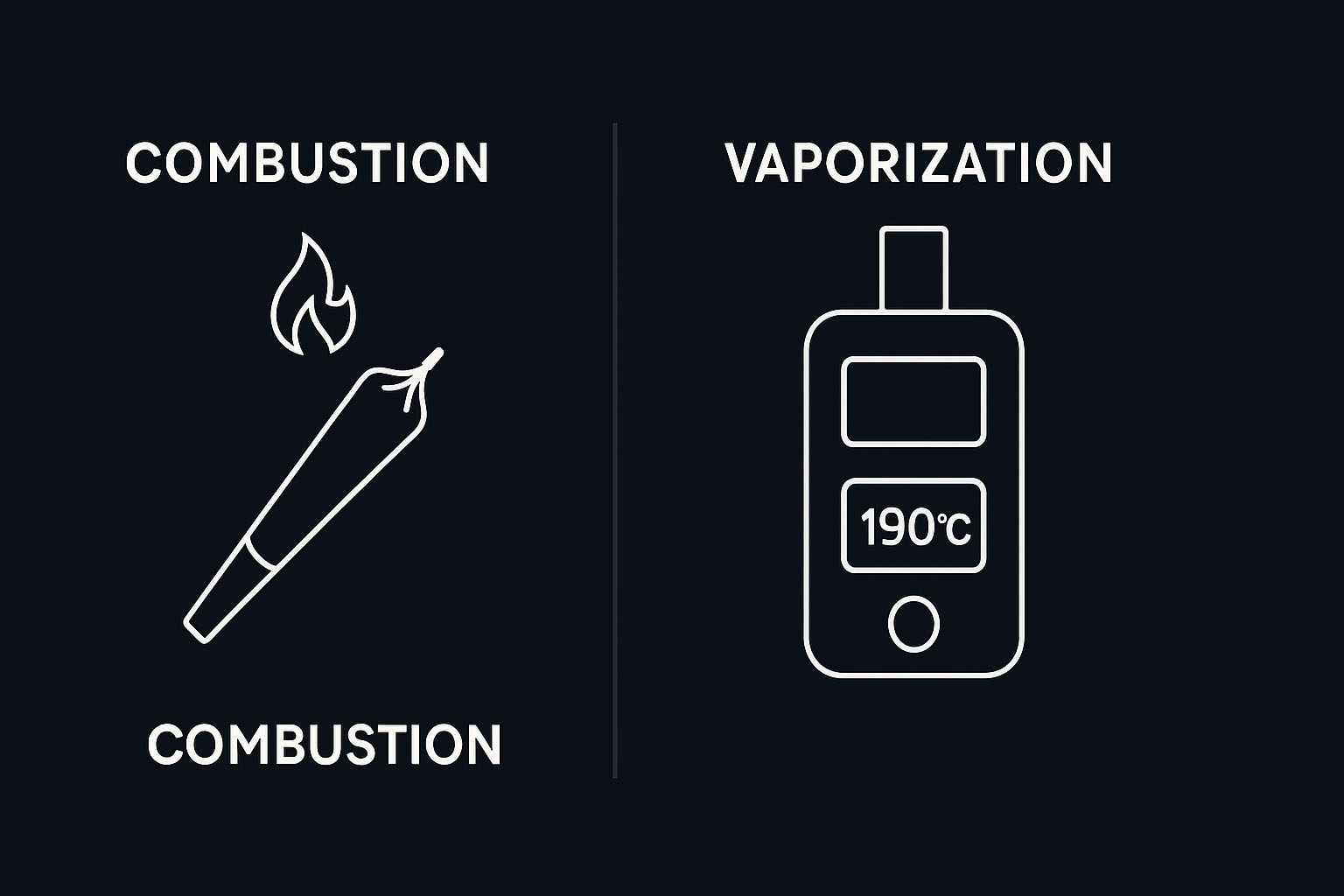
Heat strategy defines the chemistry you inhale.
How to Choose: A Simple Decision Flow
What’s your top priority?
“I want softer, cleaner inhales and flavour.” → Vape
“I want simple, cheap, and social.” → Smoke (or share someone else’s perfectly rolled cone and take tiny puffs)
Where are you using it?
Apartment / shared spaces / odour matters → Vape
Patio / open air / ceremony matters → Smoke or Vape, your call
Budget now vs later?
Low now → Smoke
Save later → Vape
Dose style?
Micro-hits, frequent tiny sessions → Vape
One-and-done “spark and talk” → Smoke
Harm-Reduction Tips (Whichever Path You Pick)
For Smokers
Use small puffs; skip deep holds.
Don’t mix with tobacco; use clean glass or a filter tip.
Keep sessions outdoors or well-ventilated.
Rotate to edibles or oils on non-smoke days to give your throat a break.
For Vapers
Buy reputable devices; avoid knock-offs.
Clean weekly: brush the oven, soak metal screens in isopropyl alcohol, rinse, dry.
Grind coarsely and don’t overpack; airflow is flavour.
Learn temperature stepping: 180 °C for flavour, finish at ~205–210 °C.
For Everyone
Skip alcohol on cannabis nights—it raises impairment and nausea risk.
Never drive high (full stop).
Start low, go slow. Future-you thanks present-you.
What About Vape Carts?
This piece focuses on dry-herb vaping. Oil cartridges are a different product with different questions (solvents, thickeners, flavourings). If you use carts, check ingredients, prefer brands with published testing, and avoid mystery formulations. When in doubt, dry flower + reputable device keeps variables simple.
Image: Cost Over Time (illustrative)

Upfront vs ongoing costs: where the lines meet depends on how often—and how much—you consume.
Frequently Asked Questions
Does vaping get you “less high” than smoking?
At low temps, vaping feels lighter and clearer; at higher temps and full extraction, the effect can be just as strong. Because it’s smoother, people sometimes accidentally take more—use the same dosing rules: one or two small draws, wait 10 minutes.
Will vaping save me money for sure?
If you use cannabis regularly and like micro-sessions, usually yes. If you consume rarely, the cheaper startup of smoking might make more sense.
Is the flavour difference really that big?
If you care about terpenes, yes. Many people taste citrus, pine, or floral notes on a vape that they never noticed in smoke.
Can I “finish” a vape bowl later?
Absolutely. The partially vaped bud (often called ABV, already-been-vaped) can even be saved for low-effort edibles. (It won’t win culinary awards, but it’s frugal.)
A Balanced Recommendation
If you’re new, start with a dry-herb vape or occasional edibles. You’ll learn your dose with fewer harsh moments, waste less, and keep your home’s smell diplomacy intact.
If you love the ritual of joints, enjoy them mindfully—tiny puffs, fresh air, and rest days.
Many people keep both: vape for weekday micro-sessions and smoke for backyard weekends. That’s not indecisive; it’s adaptive.
Editor’s note: This guide supports responsible adult use and is educational—not medical advice. Always follow your local laws and your product’s label directions.