Health impact, cost breakdown, flavor, convenience—we compare every angle so you can pick your ideal method.
Whether you're new to cannabis or reconsidering how you consume it, the smoking vs vaping debate comes down to more than just "healthier" or "not." This guide breaks down onset time, flavor, cost, convenience, and long-term considerations so you can make an informed choice that fits your lifestyle and goals.
The Essential Differences at a Glance
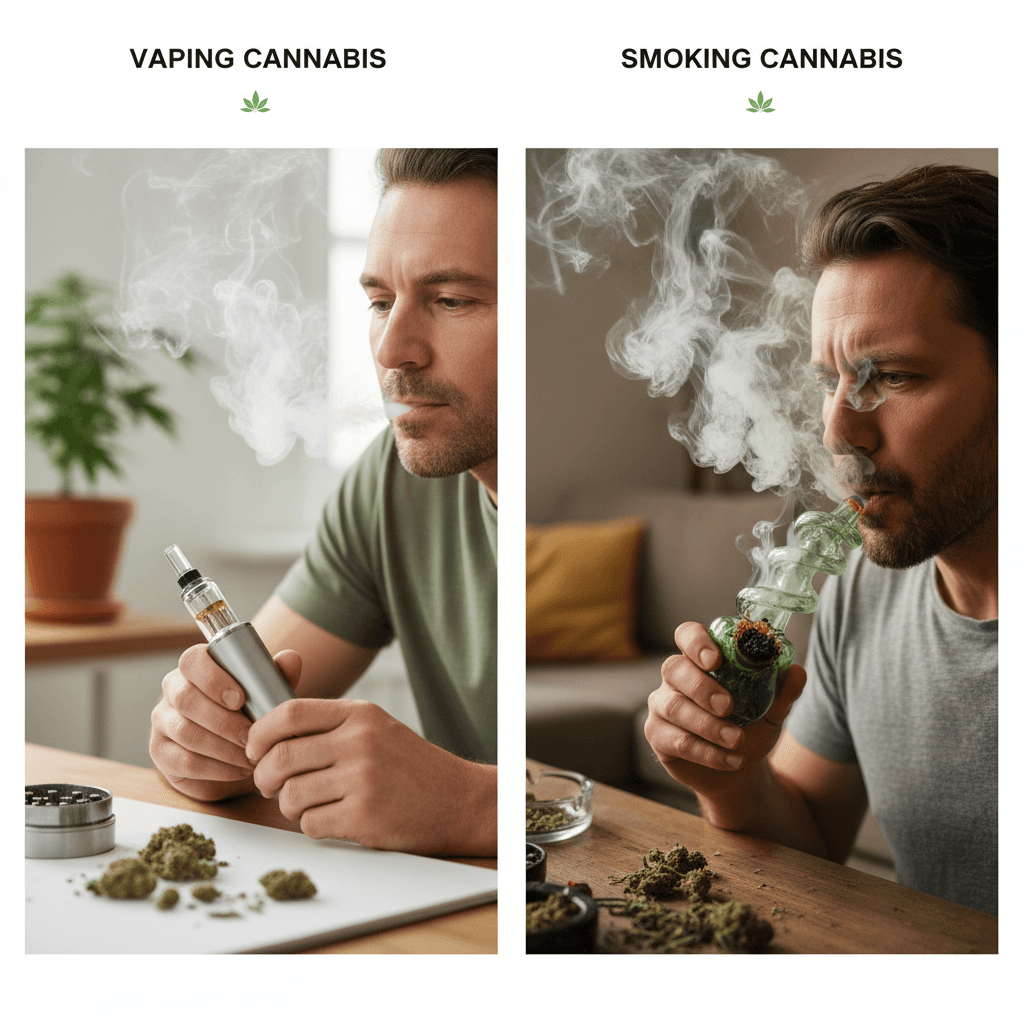
Smoking burns plant material at high temperatures (600-900°C), creating combustion byproducts alongside cannabinoids and terpenes.
Vaping heats cannabis to lower temperatures (160-220°C), vaporizing active compounds without burning plant matter.
Both methods deliver effects through inhalation, but the experience, health impact, and efficiency differ significantly.
Health Impact: What the Science Shows
Smoking Cannabis
What happens: Combustion creates tar, carbon monoxide, and other potentially harmful compounds found in any burning plant matter.
Respiratory effects:
- Short-term: possible throat irritation, coughing, phlegm production
- Long-term: studies suggest increased risk of chronic bronchitis symptoms; mixed evidence on lung function decline
- Important context: Research shows cannabis smoke contains fewer carcinogens than tobacco, but combustion byproducts are still present
Vaping Cannabis
What happens: Controlled heating releases cannabinoids and terpenes while avoiding combustion byproducts.
Respiratory effects:
- Studies show reduced respiratory symptoms compared to smoking
- Less coughing, throat irritation, and phlegm production
- One major study found that vaporizing eliminated respiratory symptoms in regular cannabis users who switched from smoking
Bottom line: Vaping appears to be the less harmful option for lung health, though long-term research on cannabis vaping specifically is still developing.
Onset, Intensity & Duration
Both methods deliver effects quickly through the lungs, but subtle differences exist:
| Method | Onset | Peak | Duration | Feel |
|---|---|---|---|---|
| Smoking | 2-10 minutes | 15-30 minutes | 2-4 hours | Often described as more "immediate," sometimes "heavier" body feel |
| Vaping | 2-10 minutes | 15-45 minutes | 2-4 hours | Often described as more "clear-headed," flavor-forward experience |
Why the difference? Combustion destroys some terpenes and creates additional compounds. Many users report vaping feels "cleaner" or more true to the strain's intended profile.
Flavor & Aroma Experience
Smoking
- First puff: You might taste strain characteristics
- Subsequent puffs: Combustion flavors tend to dominate (smoke, ash, heat)
- Terpenes: Many are destroyed by high temperatures
- Overall: Familiar "cannabis smoke" smell and taste that's consistent across strains
Vaping
- Temperature control preserves different terpenes (citrus, pine, earth, floral)
- Strain differences are more pronounced and recognizable
- Less odor: Vapor dissipates faster and smells less "skunky" than smoke
- Overall: More nuanced flavor experience, especially at lower temperatures
For flavor enthusiasts: Vaping wins clearly. You'll actually taste what makes each strain unique.
Cost Analysis (Real Numbers)
Upfront Costs
Smoking setup:
- Papers, lighter, basic pipe: $10-50
- Quality glass pipe/bong: $50-300+
- Total startup: $10-300+
Vaping setup:
- Budget portable vaporizer: $80-150
- Mid-range device: $150-300
- Premium desktop/portable: $300-600+
- Total startup: $80-600+
Long-term Efficiency
Cannabis consumption:
- Smoking: Combustion destroys some active compounds; you need more material for the same effects
- Vaping: More efficient extraction; 20-40% less cannabis needed for equivalent effects
Real-world example: If you normally spend $200/month on cannabis for smoking, switching to vaping might reduce that to $120-160/month while maintaining the same experience level.
Break-even point: A $200 vaporizer typically pays for itself in 3-6 months through reduced cannabis consumption.
Convenience & Lifestyle Factors
Smoking Pros:
- Simple: Light and inhale, no learning curve
- Social familiarity: Most people understand how to use pipes/papers
- No battery/charging: Works anywhere, anytime
- Immediate full-temperature extraction: One hit delivers everything
Smoking Cons:
- Lingering smell on clothes, furniture, hands
- Indoor use may be problematic for living situations
- Visible smoke more obvious in public/discrete settings
- Weather sensitive: Wind/rain affects lighting and experience
Vaping Pros:
- Discrete: Less visible vapor, lighter smell that dissipates quickly
- Temperature control: Customize your experience
- Indoor-friendly: Less lingering odor
- Efficient: Stretch your cannabis further
- Precise dosing: Easier to take small amounts
Vaping Cons:
- Learning curve: Temperature settings, technique take practice
- Battery dependence: Device needs charging; may die mid-session
- Maintenance: Regular cleaning required for optimal performance
- Session time: Takes longer to fully extract compared to smoking
Which Method for Which Situation?
Choose Smoking When:
- You want simplicity and immediate full effects
- Social sessions where sharing and familiarity matter
- You're camping/outdoors without access to charging
- Budget is tight and you want minimal upfront cost
- You enjoy the ritual and traditional experience
Choose Vaping When:
- Health is a primary concern
- You want to maximize your cannabis investment
- Discrete use is important (apartments, shared spaces)
- You're interested in flavor exploration and strain differences
- You want more control over dose and intensity
- Indoor use is your primary consumption pattern
Consider Hybrid Approach:
Many experienced users keep both options available—vaping for daily use and health benefits, smoking for social situations or when convenience matters most.
The Verdict: It Depends on Your Priorities
Choose smoking if: Simplicity, social familiarity, and minimal upfront cost matter most to you.
Choose vaping if: Health impact, efficiency, flavor, and discretion are your priorities—and you're willing to invest in equipment and a brief learning period.
Best of both worlds: Many users find that having both options available gives them the flexibility to match their consumption method to different situations and goals.
The "better" choice is the one that aligns with your health goals, lifestyle, budget, and personal preferences. Both methods can be part of responsible cannabis use when done thoughtfully and legally.
FAQs
Is vaping really healthier than smoking?
Research suggests vaping produces fewer respiratory irritants and symptoms compared to smoking, but long-term studies specifically on cannabis vaping are still developing.
Will I get as high from vaping?
Yes, but the experience may feel different initially. Many users report vaping produces a "cleaner" or more clear-headed high while maintaining intensity.
What's the best vaporizer for beginners?
Mid-range dry herb devices ($150-250) often provide the best balance of performance, ease of use, and value. Research current models and read user reviews before purchasing.
Can I use the same cannabis for both methods?
Yes, any dried cannabis flower works for both smoking and dry herb vaping. However, extremely dry or old flower may work better in one method vs the other.
Related Articles in The Green Guide
- Cannabis 101: Everything First-Time Users in Canada Need to Know
- Indica vs Sativa vs Hybrid: Which Strain Is Right for You?
- Beginner's Guide to Cannabis Dosage
Editor's note: This article supports responsible adult use in Canada and is not medical advice. Always follow current laws and consult healthcare providers if you have medical concerns about cannabis consumption.