Responsible cannabis use: a guide for Canadian adults
Responsible cannabis use is the practice of consuming cannabis in ways that reduce health risks for yourself and those around you. The formal framework behind this idea is the Lower-Risk Cannabis Use Guidelines (LRCUG), an evidence-based standard developed to help Canadians make safer choices. Health Canada reinforces these guidelines by recommending specific behaviours: limiting how often you use, choosing lower-potency products, and avoiding combustion methods. Whether you are brand new to weed or a seasoned consumer, understanding what is responsible cannabis use is the single most useful thing you can do before your next session.
What are the key principles of responsible cannabis use?
The LRCUG outlines a clear set of behaviours that meaningfully reduce harm. These are not arbitrary rules. Each one is backed by research connecting specific habits to specific risks.
Here are the core principles every adult should know:
- Use less than daily. Daily or near-daily use is the strongest predictor of cannabis-related health problems. Keeping sessions to a few times per week gives your brain and body time to reset.
- Choose lower-potency products. Products over 10% THC for smoking or vaping, or above 10mg THC for edibles, raise the risk of anxiety, paranoia, and dependence. Starting with a milder product is not a compromise. It is the smarter play.
- Skip combustion when you can. Smoking creates carcinogens similar to tobacco. Vaporizers and edibles are safer methods that still deliver the effect you are after.
- Delay starting as long as possible. Brain development completes around age 25, and teen use is linked to IQ drops and impaired decision-making. The later you start, the lower your long-term risk.
- Avoid synthetic cannabinoids entirely. Products like K2 or Spice are not cannabis. They cause severe adverse health effects and have no place in a responsible cannabis practice.
Pro Tip: Balanced THC:CBD products are a great harm-reduction swap if high-THC options leave you feeling anxious. The CBD acts as a natural counterweight to THC’s intensity.
The principle that surprises most people is the potency one. Many adults assume stronger means better value. The research says the opposite. High-potency products push you past the point of enjoyment faster and increase dependence risk over time.
How to apply safe cannabis practices across consumption methods
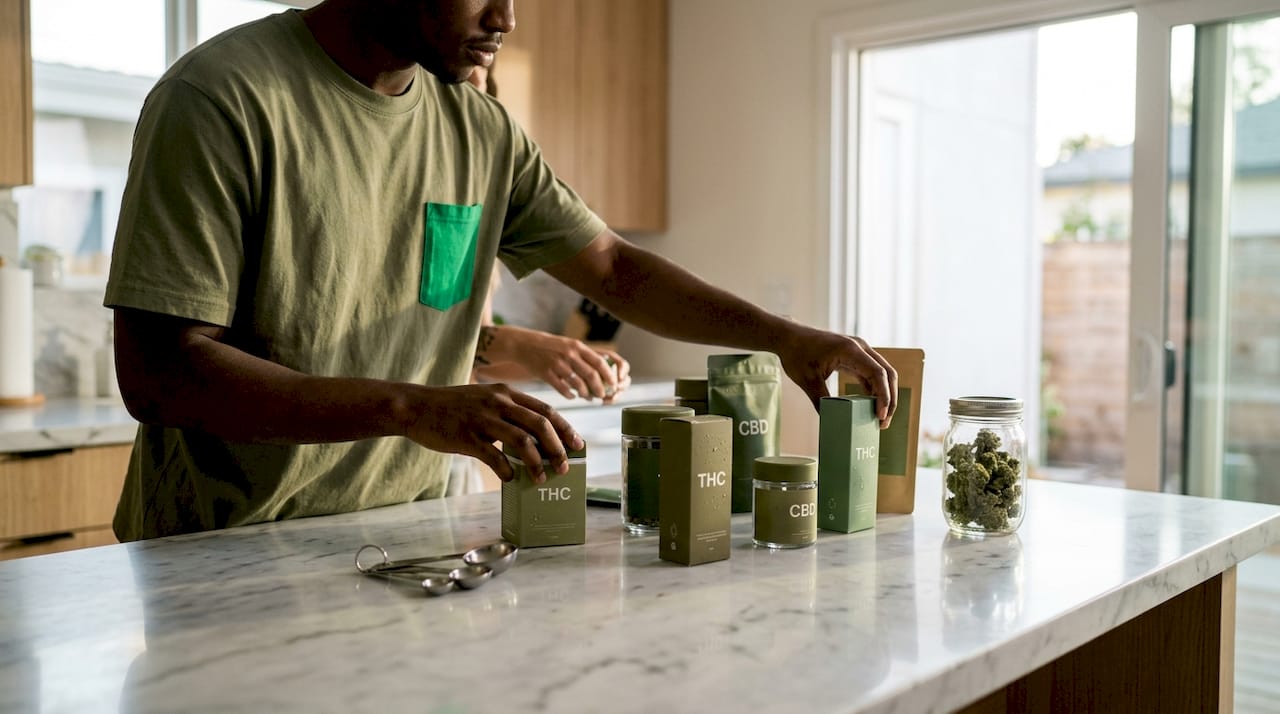
Different methods carry different risks. Knowing how each one works helps you stay in control.
-
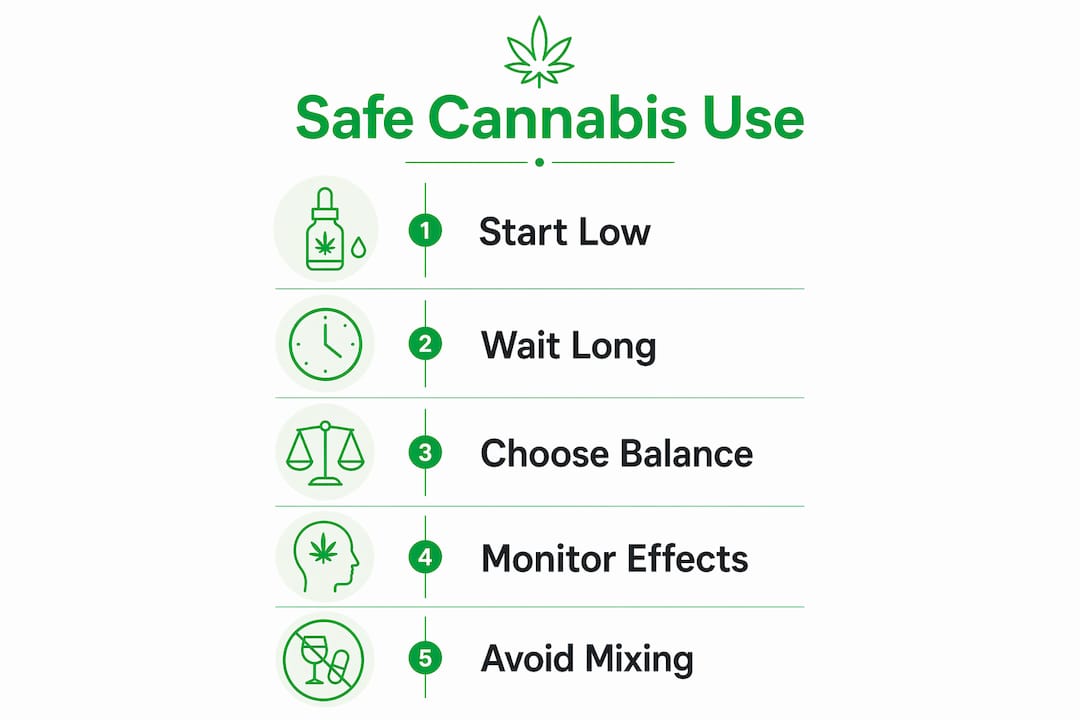
Edibles: start at 2.5mg THC and wait. Edibles take 2–4 hours to reach peak effect. Redosing too soon is the most frequent cause of accidental overconsumption. Eat a gummy, put the bag away, and give it a full two hours before you even think about more.
-
Vaporizers: a better choice than smoking. Vaporizers heat cannabis without burning it, which cuts your exposure to combustion byproducts. They also make it easier to take one or two controlled puffs rather than finishing an entire joint.
-
Tinctures: the underrated option. Sublingual tinctures allow for consistent, controlled dosing and avoid respiratory harm entirely. A few drops under the tongue, held for 60 seconds, and you know exactly what you took.
-
Smoking: reduce harm if you do it. If you choose to smoke, avoid deep inhalation and breath holding. These habits increase toxin absorption without meaningfully improving the effect. And skip the water pipe myth: bongs do not filter out the harmful stuff in any significant way.
-
Concentrates: handle with care. High-potency concentrates can contain THC levels far above the 10% threshold. They are not a beginner product, and even experienced users should approach them cautiously.
Pro Tip: Think of your first session with any new product as a science experiment with a sample size of one. Take a small amount, observe the results, and adjust next time.
The biggest mistake people make with edibles is treating them like a drink. You do not feel a beer in 90 minutes, so you have another. With a cannabis gummy, that second one hits you both at once, usually at the worst possible moment.
What are the common risks and how does responsible use reduce them?
Cannabis carries real risks when used carelessly. Responsible use practices exist precisely to address these.
Mental health risks are the most significant concern for many adults. Daily cannabis use increases the risk of psychosis and schizophrenia, especially for people with a personal or family history of mental illness. This is not a scare tactic. It is a documented pattern that makes frequency management genuinely important.
Respiratory risks come directly from combustion. Smoke contains carcinogens regardless of what you are burning. Switching to vaporizers or edibles removes this risk category almost entirely.
Mixing with other substances is a common and underappreciated hazard. Combining cannabis with alcohol amplifies impairment and increases the likelihood of a bad psychological experience. The two together are not simply additive. They interact in ways that catch people off guard.
Here is a quick reference for the main risk categories and how responsible use addresses each:
| Risk | Cause | Responsible use response |
|---|---|---|
| Dependence | Daily use, high potency | Use less than daily; choose products under 10% THC |
| Anxiety and paranoia | High THC doses | Start at 2.5mg; choose balanced THC:CBD products |
| Respiratory harm | Combustion | Switch to vaporizers or edibles |
| Psychosis risk | Daily use, mental health history | Limit frequency; avoid use if family history exists |
| Impaired driving | Any cannabis use before driving | Never drive after using cannabis |
Impaired driving deserves its own mention. Cannabis impedes reaction time and is illegal to combine with driving in Canada. This is not a grey area.
How to build responsible cannabis habits in everyday life
Knowing the principles is one thing. Building them into your actual routine is another. Here are the habits that make the biggest difference.
- Keep a consumption diary. Most people underestimate how often they use. A simple note on your phone, date, method, and dose, gives you an honest picture of your patterns. It is the most effective self-monitoring tool available, and it costs nothing.
- Buy from licensed dispensaries only. Licensed cannabis products are tested for contaminants and accurate THC/CBD levels. Unlicensed sources cannot make that guarantee. You can find verified licensed dispensaries across Canada through Cannaradar.
- Store cannabis safely. Keep products in a locked container, away from children and pets. Edibles especially look like regular food. A curious kid or dog does not know the difference.
- Respect non-users. Do not use cannabis in shared spaces without consent. Secondhand smoke is a real exposure, and not everyone around you has opted in.
- Know when to get help. If you find yourself using daily, feeling anxious without cannabis, or struggling to cut back, talk to a healthcare provider. Harm reduction works best when paired with professional support when needed.
Pro Tip: Pair your consumption diary with a simple weekly review. If you used more than three times in a week, that is your cue to take a few days off. Treat it like a budget, not a judgement.
The cannabis glossary on Cannaradar is a genuinely useful resource for understanding product labels, potency terms, and strain differences. Knowing what “indica-dominant” or “full-spectrum” actually means helps you make better purchasing decisions.
Key takeaways
Responsible cannabis use means applying the Lower-Risk Cannabis Use Guidelines consistently: limiting frequency, choosing lower-potency products, avoiding combustion, and self-monitoring your habits over time.
| Point | Details |
|---|---|
| Limit use frequency | Use less than daily to reduce dependence and mental health risks significantly. |
| Choose lower potency | Stay under 10% THC for inhaled products and under 10mg for edibles. |
| Avoid combustion | Vaporizers and edibles cut respiratory risk compared to smoking. |
| Self-monitor with a diary | Written tracking is the most effective way to catch creeping frequency increases. |
| Buy from licensed sources | Licensed products are tested for safety; unlicensed ones are not. |
The uncomfortable truth about “responsible use” messaging
Here is something I have noticed after years of watching cannabis education evolve in Canada. Most responsible use content is written for a hypothetical person who has never touched weed and needs to be scared straight. That is the wrong audience, and it is the wrong approach.
The adults who actually need this information are not reckless. They are curious, experienced, and often already doing most things right. What they are missing is not warnings. It is specificity. Nobody told them that the 10% THC threshold is a real number with real research behind it, not just a conservative suggestion. Nobody explained that their water pipe is not actually filtering anything meaningful. Nobody mentioned that their “I only use on weekends” habit is genuinely protective.
Harm reduction works better than abstinence messaging because it meets people where they are. The LRCUG is a genuinely good framework, not because it tells you to stop, but because it tells you exactly which behaviours carry the most risk and lets you make an informed call. That is what responsible use education should look like: specific, evidence-based, and respectful of adult autonomy.
My honest recommendation is to read the guidelines once, pick the two or three principles that apply most to your current habits, and focus there. You do not need a complete overhaul. You need a calibration.
— Tuan
Cannaradar makes informed cannabis shopping easier
Finding quality cannabis products from trusted sources is a core part of responsible use. Cannaradar brings together over 2,071 licensed businesses across Canada in one place, so you are never guessing about legitimacy.
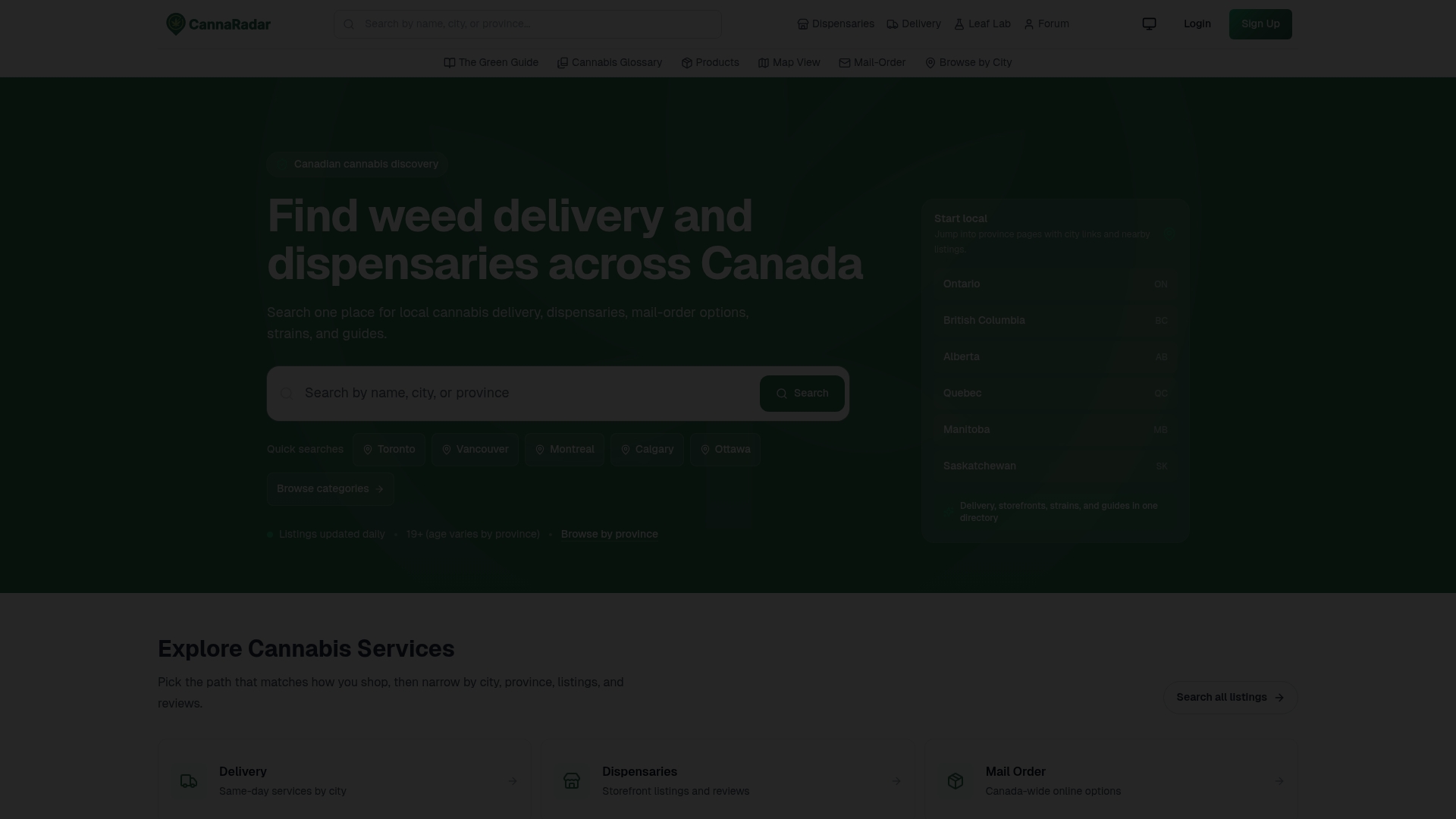
The Green Guide is Cannaradar’s plain-English resource for Canadians who want evidence-based advice without the medical jargon. Whether you are comparing potency levels, learning about consumption methods, or looking for weed delivery services near you, Cannaradar has the listings and the education to back your choices. Browse the Cannaradar directory and find a licensed dispensary or delivery service that fits your needs today.
FAQ
What is responsible cannabis use?
Responsible cannabis use means consuming cannabis in ways that reduce health risks, guided by evidence-based frameworks like the Lower-Risk Cannabis Use Guidelines (LRCUG). Key behaviours include using less than daily, choosing lower-potency products, and avoiding combustion methods.
How much THC is considered a safe starting dose?
Starting at 2.5mg THC or less is the recommended approach, especially for edibles. Waiting 2–4 hours before considering more prevents the most common cause of overconsumption.
Why is daily cannabis use a problem?
Daily or near-daily use is the strongest predictor of cannabis-related health problems, including dependence and increased psychosis risk. Keeping use to a few times per week significantly reduces these risks.
Is vaping cannabis safer than smoking it?
Vaporizers are safer than smoking because they avoid combustion, which produces carcinogens. Edibles and tinctures are also safer alternatives that eliminate respiratory exposure entirely.
Can I use cannabis responsibly if I have a mental health history?
People with a personal or family history of mental illness face higher risk from cannabis use, particularly with daily use or high-potency products. Consulting a healthcare provider before using is the most responsible step in this situation.