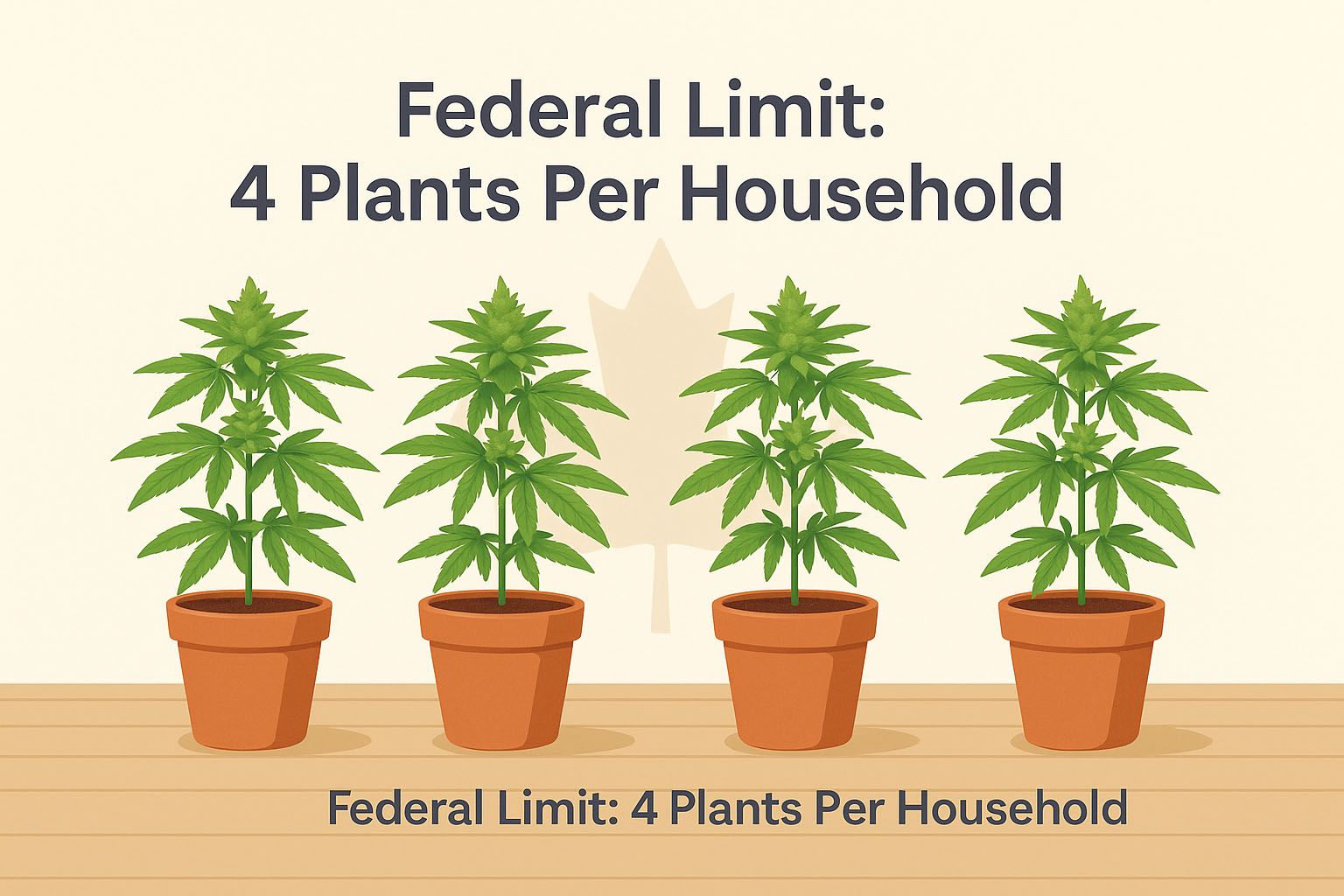
When it comes to growing cannabis in Canada, you might think the hard part is choosing your strain or setting up your lights. But actually, the harder part is figuring out where you live. Because while the federal Cannabis Act sets the baseline — adults can grow up to four plants per household — the provinces each write their own rules. (Canada)
In this 2025 update, we’re walking you through what your province really allows (and what it doesn’t) when it comes to home cultivation. Whether you’re in B.C., Ontario, Quebec or somewhere in-between, this is your one-stop reference. And if you’re just getting started, make sure you also check our beginner-friendly guides in the Green Guide for more context.
Canada’s Baseline: Federal Rules You Must Know
At the federal level, the rules are relatively straightforward. Adults of legal age may cultivate up to four cannabis plants per household (not per person) for non-medical use. (Canada) You can also share up to 30 g of dried product with other adults (legal age) — but you cannot sell your home-grown cannabis. (ccsa.ca)
However — and this is big — if your province forbids or restricts home growing, you must follow the provincial rule. Think of the federal law as the “floor,” not the “ceiling.” In practice, that means even if the Act allows four plants, your province might allow zero, two, or other restrictions. (Wikipedia)
Province-by-Province Highlights: Know Your Region
Here’s a breakdown of some key provincial rules around home growing in 2025. (Note: Municipal rules may add further restrictions — always check locally.)
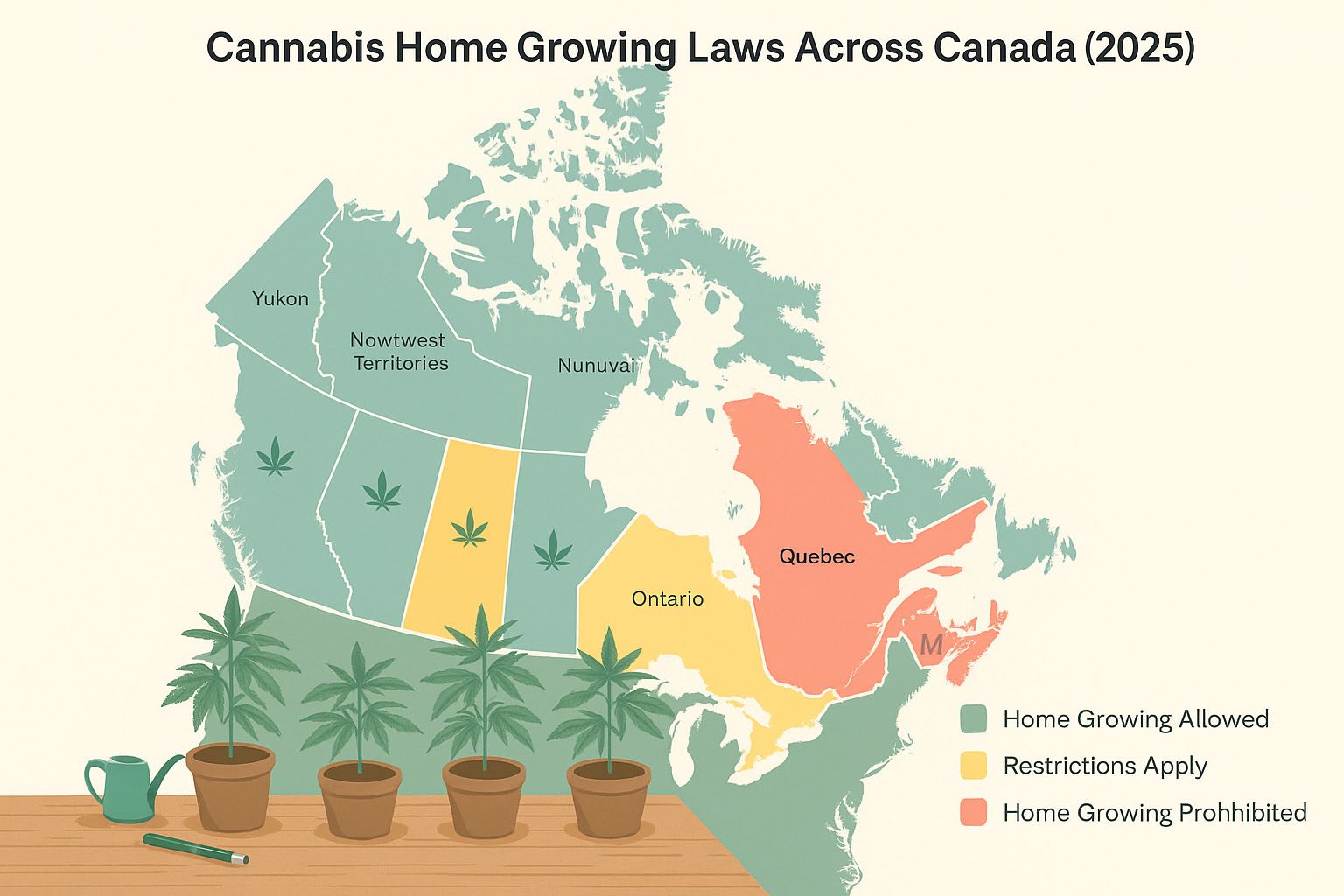
Alberta: Legal age 18. Home cultivation allowed — up to four plants per household.
British Columbia (B.C.): Legal age 19. Home grow permitted — maximum four plants; plants must not be visible from public space.
Manitoba: Legal age 19. No home cultivation permitted for non-medical use — one of the exceptions.
Ontario: Legal age 19. Home growing up to four plants allowed; must be from legal seed/seedling.
Quebec: Legal age 21. Home cultivation prohibited for recreational users (though medical patients may have different rules). (Wikipedia)
Nova Scotia, Prince Edward Island (PEI), Newfoundland & Labrador: Legal age 19. Home cultivation allowed up to four plants, indoors; outdoor grow often disallowed or restricted.
Saskatchewan and Yukon: Legal age 19. Home cultivation allowed (up to four plants), though rental agreements or condo bylaws may limit you.
Northwest Territories, Nunavut: Legal age 19. Home growing allowed up to four plants; local community rules may add limitations.
These variations reflect that growing at home is a patchwork of rules — what you can do in Toronto might be forbidden in city limits in Quebec or Winnipeg. Some provinces emphasize public health via stricter rules; others allow more freedom.
Why the Differences Exist
Why do some provinces allow four plants and others none? The reasons are partly historical and partly political:
Public health concerns: Some jurisdictions view home cultivation as harder to regulate (pesticides, mould, youth access) and therefore ban it.
Housing and rental landscapes: In provinces with lots of rental and multi-unit dwellings, more restrictions exist simply because of fire codes, odour concerns, and shared spaces.
Revenue and commercial policy: Provinces that rely heavily on regulated retail frameworks may discourage home grow in favour of licensed sales.
Municipal and regional autonomy: Some municipalities overlay further bylaws — e.g., no visible plants, indoor only, no outdoor grow at all.
Federal policy documents note that while personal growing is allowed, provinces must consider local risks around security, youth access, fire/structural safety, and diversion to the illicit market. (ccsa.ca)
Practical Tips for Home Growers (Staying Legal)
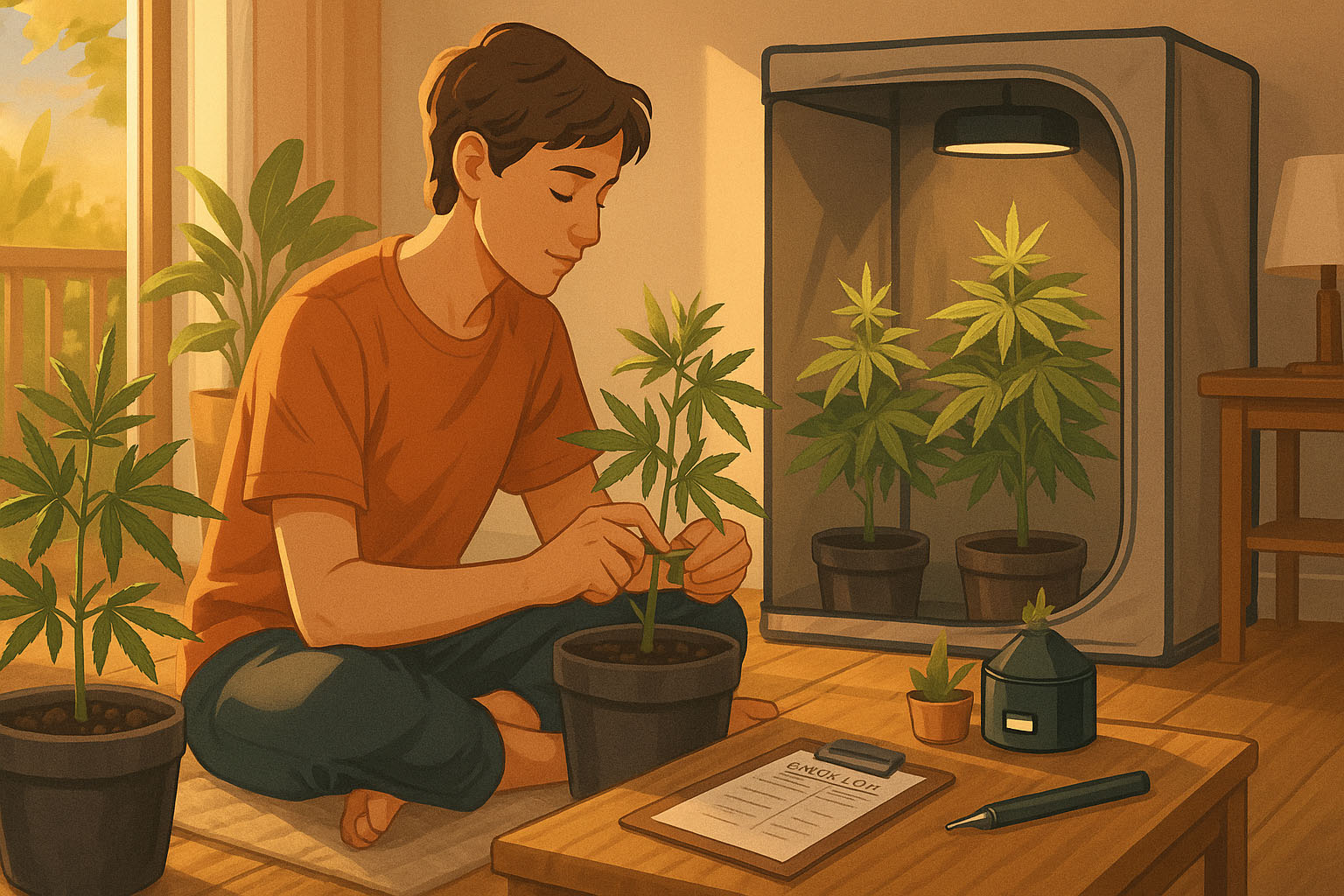
Even in provinces where home growing is allowed, you still need to stay compliant. Here are key reminders:
Seed source matters: Use legal seeds or seedlings from a licensed provider. Growing from wild or illicit sources may breach regulations. (Canada)
Household, not individual limit: “Four plants per household” means no stacking multiple households in one dwelling.
Location and visibility: Plants must typically not be visible from public spaces (B.C., Nova Scotia).
Storage and security: The federal site encourages practices like safe locking, ventilation, odor control, and avoiding electrical hazards. (Canada)
Sharing vs selling: Sharing with other adults is permitted (up to 30 g) but selling your plants/products without a licence is strictly illegal.
Be aware of landlord/condo rules: Even if provincial law allows it, your lease or strata may forbid home grow.
Monitor local changes: Laws evolve — e.g., municipalities may ban visible grows, or new bylaws may affect outdoor growing.
When Things Get Tricky: Outliers & Edge Cases
Quebec’s ban on home cultivation: Among the strictest, Quebec prohibits home growing for recreational users altogether. (Wikipedia)
Manitoba’s restrictions: While most provinces allow four plants, Manitoba does not allow home grow for recreational users.
Landlord rights and condos: Renting or living in a multi-unit building may create extra hurdles even if your province permits growing.
Medical patients: If you have a federal medical growing authorisation, you may exceed the standard four-plant limit — but you must still meet provincial and municipal rules and hold the correct registration. (Canada)
In short: “Just because you can doesn’t mean you should — or that it’s legal.”
How This Ties Into the CannaRadar Ecosystem
As you explore the legalities of growing, you might also want to check our deeper content on cannabis basics and cultivation tips:
Visit our Green Guide for plain-English, Canada-focused educational articles.
Explore our Strain Library (if available) for genetics you might want to grow legally under your provincial rules.
For Canadian states where home cultivation isn’t allowed, we highlight legal alternatives in our Product Buying Guides.
By connecting your legal understanding with trusted content, CannaRadar helps you grow not only plants — but knowledge.
Final Thoughts
Growing cannabis at home in Canada can be a straightforward and rewarding experience — if you’re informed. It’s not just about the plants; it’s about compliance, context and respecting the rules that vary from coast to coast.
In 2025, the key takeaway is: check your province’s rules first, gear up legally, and always stay within both provincial and federal boundaries. Failure to do so can mean fines, confiscation of plants, or worse — turning your home grow from hobby to headache.
Whether you’re a seasoned cultivator or curious first-timer, use this guide as your starting point — and dive deeper into cultivation, safety, and legal compliance with the detailed content in our Learn Hub. Because in the world of Canadian cannabis, knowledge is the first seed of success.