![How to Make Cannabutter the Easy Way [Step-by-Step Recipe]](/_next/image?url=https%3A%2F%2Fbqzegqgpdhxiwmwpyhcw.supabase.co%2Fstorage%2Fv1%2Fobject%2Fpublic%2Fgreen_guide_media%2Ffeatured%2F1759877343940-mkits08a1z.webp&w=1920&q=75)
Cannabutter is the Swiss Army knife of edibles: versatile, powerful, and—if you make it right—predictable. This guide gives you a no-drama method with exact temps, clean straining, and a potency shortcut so your brownies don’t become “time-travel brownies.” Aprons on; chaos off.
What You’ll Learn (and why it matters)
Decarb made simple: turn THCA into THC without burning terpenes.
Set-and-forget infusion: smooth flavour, no scorched milk solids.
Strain like a pro: zero sediment, silky finish.
Potency math in 30 seconds: know your mg THC per teaspoon.
Storage & safety: label, refrigerate/freeze, keep out of reach.
Ingredients & Equipment
Ingredients
1 cup (225 g) unsalted butter (or 1 cup refined coconut oil)
7–14 g dried cannabis flower, ground to coarse (think oregano, not powder)
Optional: 1 tsp sunflower lecithin (helps emulsify; some prefer texture with it)
Equipment
Baking sheet + parchment (for decarb)
Small saucepan + heat diffuser or slow cooker or double boiler
Fine mesh strainer + cheesecloth (or a nut-milk bag)
Thermometer (instant-read is fine)
Glass jar with lid, masking tape + marker for labels
Step 1 — Decarboxylate (the “unlock”)
Why: Raw THCA ≠ classic THC effects. Decarboxylation (gentle heat) removes a CO₂ group, converting THCA → THC.
How:
Preheat oven to 240 °F / 115 °C (reliable sweet spot).
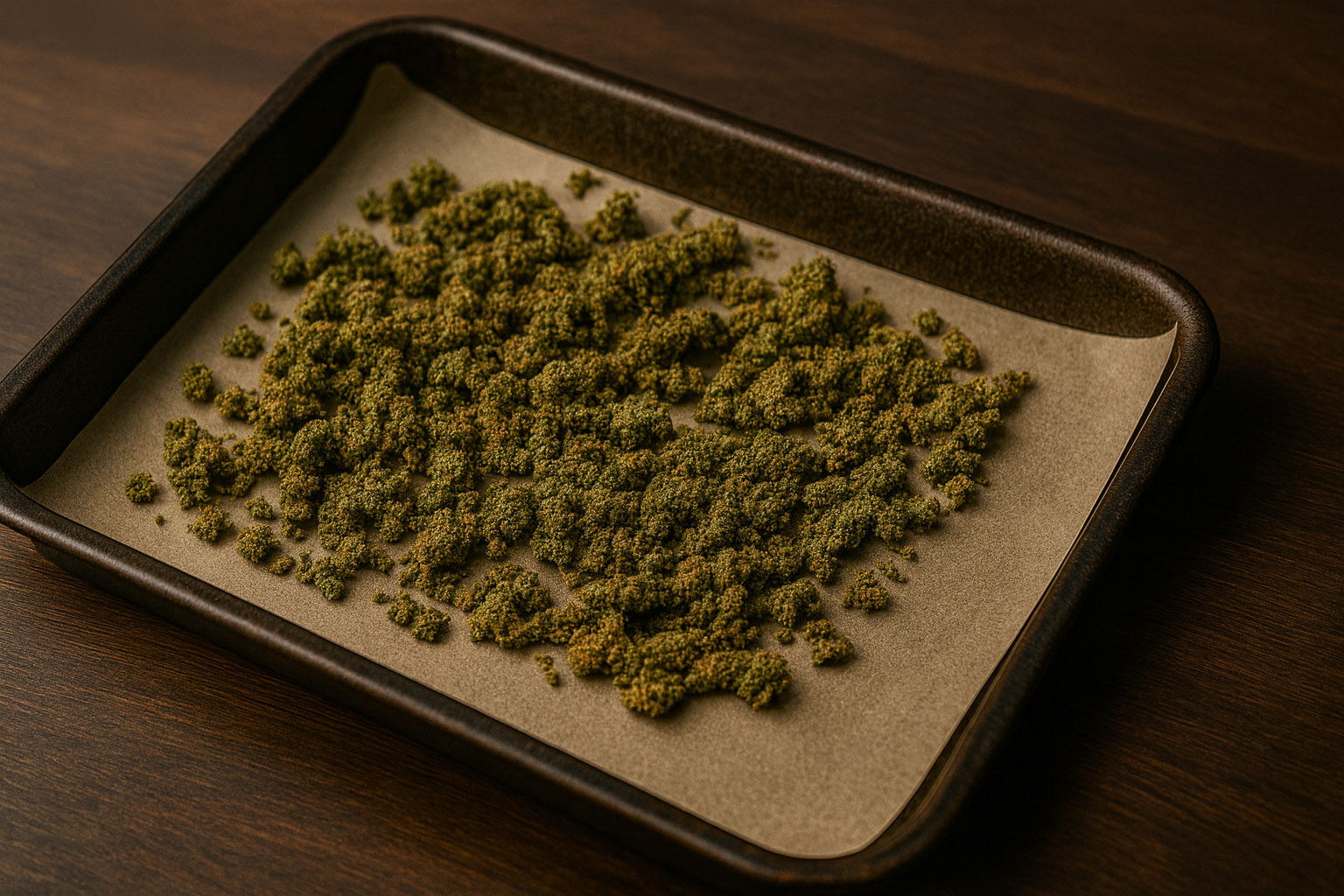
Break flower into popcorn-size pieces (don’t grind to dust yet), spread on parchment.
Bake 40 minutes, gently stirring once at the halfway mark.
Cool 5 minutes, then coarse-grind.
Tip: If using very dry flower, lower to 230 °F / 110 °C for 45 minutes. If it smells toasty or turns brown early, your oven runs hot—use an oven thermometer next time.
Step 2 — Clarify (optional but chef-approved)
Butter contains milk solids that can scorch during long infusions. Clarifying boosts stability and taste.
Melt butter on low.
Skim off foam; pour off clear golden fat, leaving the white solids behind.
You now have ghee—ideal for infusion. (Skip if using coconut oil.)
Step 3 — Infuse (stovetop or slow cooker)
Choose your path; both are easy.
A) Stovetop (double boiler or with a diffuser)
Combine 1 cup butter/ghee + 7–14 g decarbed flower in a small saucepan.
Keep temp 160–190 °F (71–88 °C) for 2–3 hours, stirring every 20–30 minutes.
Aim for a bare shimmer—never a simmer. If it bubbles, it’s too hot.
B) Slow cooker (set-and-forget)
Add butter/ghee + decarbed flower to a mason jar, lid finger-tight.
Place jar in slow cooker; add hot water to just below the lid line.
Low setting for 3 hours, water bath 160–190 °F. Shake jar (with a towel!) every 45 minutes.
Why low and slow? Cannabinoids bind to fat over time; high heat destroys flavour and volatilizes terpenes. Low heat = silky, green-gold butter that doesn’t taste like a bonfire.
Step 4 — Strain (no grit, no guesswork)
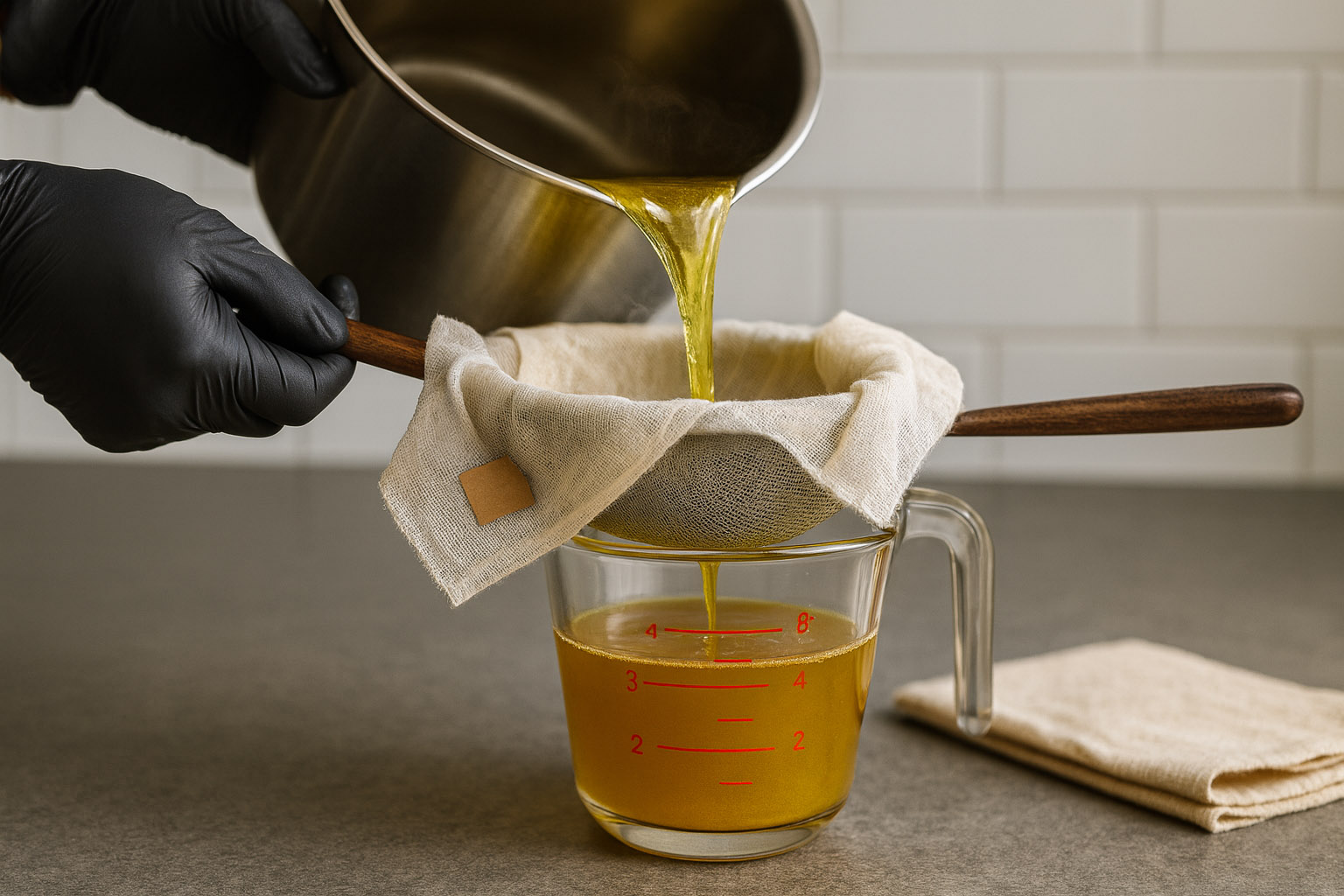
Line a strainer with two layers of cheesecloth over a bowl or large measuring cup.
Pour the mixture through; let it drain gravity-style for 5–10 minutes.
Do not wring the cheesecloth—that squeezes out chlorophyll and fine plant particles, adding bitterness.
Transfer the clear butter to a glass jar; cool to room temp, then refrigerate.
Step 5 — Label & Store (future-you will cheer)
Label: date, mg THC per teaspoon (see quick math below), and “Keep out of reach of children & pets.”
Fridge: up to 4 weeks.
Freezer: up to 6 months (portion in silicone trays for easy dosing).
Use: bake, sauté, or whisk into warm sauces. Avoid searing heat—THC degrades above 320–355 °F (160–180 °C) for long periods.
Potency: The 30-Second Math (copy this)
You’ll estimate mg THC per tsp using three inputs: flower grams, THC %, and a reasonable extraction efficiency.
Total mg THC (theoretical) =
grams × THC% × 1000Example: 10 g at 18% →
10 × 0.18 × 1000 = 1800 mg
Practical yield (assume 75% efficiency):
1800 × 0.75 = 1350 mgPer teaspoon (1 cup butter = 48 tsp):
1350 ÷ 48 ≈ 28 mg/tsp
Label it: “~28 mg THC per tsp (est.).”
Want micro-dose butter? Use 7 g at 10% THC → ~7 × 0.10 × 1000 × 0.75 / 48 ≈ 11 mg/tsp.
Starting dose for new users: ¼ tsp (2–7 mg) depending on your butter strength. Wait 2 hours before more.
The Easy Recipe (print-friendly)
Yield: ~1 cup cannabutter
1) Decarb 7–14 g flower at 240 °F / 115 °C for 40 min.
2) Clarify 1 cup unsalted butter (optional, recommended).
3) Infuse with decarbed flower at 160–190 °F for 2–3 hours (stovetop or slow cooker).
4) Strain through double cheesecloth; don’t squeeze.
5) Cool & store; label with estimated mg THC per tsp.
Flavor Tweaks (because butter is delicious)
Coconut oil base: neutral flavour, vegan, great for no-bake recipes.
Vanilla bean or citrus zest: add during the last 10 minutes of infusion for bakery-friendly aroma.
Pinch of salt: rounds bitterness.
Lecithin (1 tsp): optional emulsifier—some bakers like the texture; others skip it. Your call.
Using Cannabutter (without surprise landings)
Baking: Swap 1:1 for regular butter in cookies, brownies, banana bread. For micro-bakes, replace 25–50% of butter with cannabutter, the rest regular butter.
Savory: Melt onto vegetables, whisk into warm mashed potatoes, or finish pasta—after cooking—to protect potency.
Single-serve: Stir ¼–½ tsp into hot cocoa or tea for an easy nightcap.
Editor’s plea: Always mark infused foods. Future-you and housemates will thank you.
Safety & Compliance (Canada-friendly)
Buy legal flower from licensed retailers: you’ll get accurate THC/CBD percentages and lot info.
Keep edibles away from kids and pets—locked containers, clear labels.
Never drive after consuming edibles; effects are delayed and long-lasting.
Don’t cross borders with cannabis products, homemade or otherwise.
Troubleshooting (fast fixes)
Too weak: Use more flower next batch, or stir a ¼ tsp extra into finished servings. (Don’t reheat the whole jar repeatedly.)
Too strong: Blend cannabutter with regular butter 1:1. Cut serving sizes; note new potency on the label.
Green/grassy taste: You squeezed the cheesecloth or overheated. Next time, don’t wring and keep temps in the 160–190 °F window.
Texture separates: Re-melt gently and whisk; lecithin can help stabilization.
FAQ (short, honest answers)
Can I skip decarb?
You’ll get trace effects only. Decarb is the “on” switch—don’t skip it.
Why not grind to powder?
Powder increases sediment and grassy flavours. Coarse grind extracts beautifully with less mess.
Is coconut oil stronger than butter?
Potency is similar; some find coconut oil extracts slightly better and stores longer. Choose the flavour you prefer.
The Takeaway
Cannabutter is easy when you respect three rules: decarb, low-temp infusion, and label your potency. Do that, and everything from banana bread to Friday toast becomes not just tasty—but predictably tasty. Which is the best flavor of all.