The classic question, answered with modern science—and plain English.
Strain names can feel like wine labels: colourful, confusing, and not always predictive. This guide cuts through the noise so you can choose confidently between Indica, Sativa, and Hybrid based on how you want to feel, not just what the jar says.
The 30-Second Summary
Labels are a vibe, not a guarantee. “Indica = relaxing” and “Sativa = uplifting” are popular rules of thumb—but real effects depend more on THC/CBD amounts and terpenes (aromatic compounds) than the label alone.
Hybrids are most strains today. Breeding has blended traits; many “Indicas” and “Sativas” are actually hybrids leaning one way.
Best way to choose: start from your goal (sleep, focus, pain relief, creativity), then select a THC:CBD ratio and dominant terpenes that match it. Use dose and method (inhaled vs edible) to fine-tune.
Indica, Sativa, Hybrid—What Those Words Really Mean
Historically, Cannabis indica and Cannabis sativa described botanical features (leaf shape, plant height, origin). Over time, retail culture turned them into effect categories:
Indica: often marketed as “body-heavy,” relaxing, evening-friendly.
Sativa: often marketed as energizing, cerebral, daytime-friendly.
Hybrid: a mix—“balanced,” or leaning toward either side.
The catch: your body responds to molecules, not marketing. Two “Sativas” can feel totally different if one is high-THC with limonene (bright/citrus) and the other carries myrcene (earthy/musky). Treat labels as a starting hint, not a promise.
The Chemistry That Actually Predicts Feel
Cannabinoids (THC, CBD) and terpenes (aroma molecules) shape your experience together.
THC: the main driver of intoxication (euphoria, altered perception). Higher THC increases intensity—and the risk of anxiety at large doses.
CBD: non-intoxicating; may soften THC’s edginess and shift the feel toward calm or clear-headed.
Terpenes (dominant examples):
Myrcene – earthy; commonly associated with relaxation.
Limonene – citrus; often reported as bright or mood-lifting.
Pinene – pine; may feel alert/focused to some people.
Linalool – floral; commonly linked to calm.
Caryophyllene – peppery; sometimes described as grounding.
Think of THC/CBD as the “volume knob” and terpenes as the “EQ settings.” Together they tune the track.
Quick Comparison (Rule-of-Thumb Only)
Type Typical Marketing Description Common Use-Times Who Often Likes It Indica Relaxing, body-heavy, wind-down Evenings, sleep, aches People seeking calm, muscle ease, or a quieter head Sativa Uplifting, head-focused, creative Daytime, social, tasks People seeking mood lift, focus, or light motivation Hybrid Balanced or “leans” one way Flexible Most newcomers; easy to calibrate with dose
Reality check: Effects vary person-to-person. The same label can land differently depending on dose, method, sleep, caffeine, and context.
How to Choose by Goal (The Practical Way)
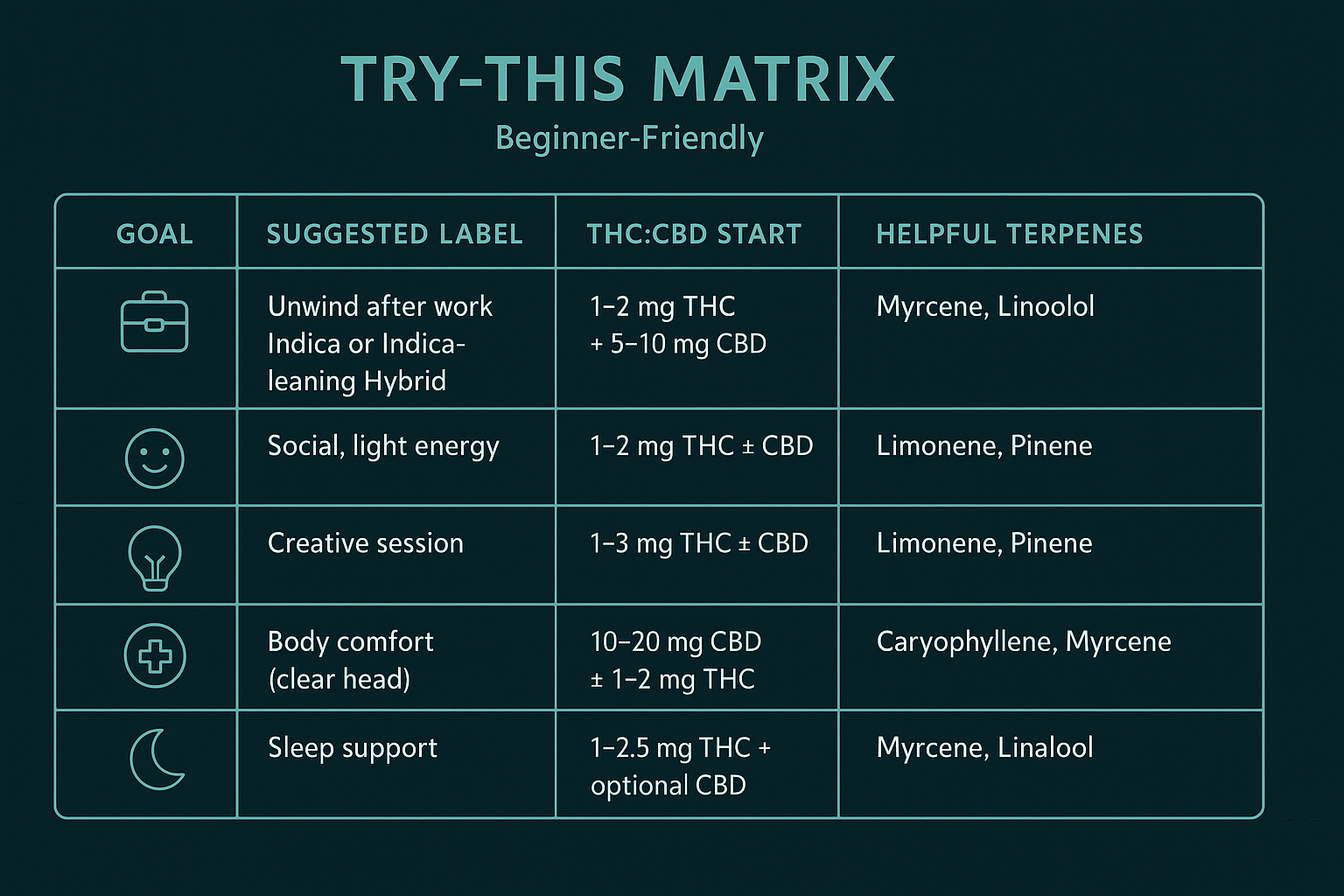
Below are beginner-friendly starting points that map goals → THC:CBD ratio → helpful terpenes → good first methods/doses. Adjust one variable at a time and keep notes.
1) Relax and Unwind (Evening)
Target: Gentle body ease, stress downshift, not “couch-locked.”
Start with: Balanced 1:1 THC:CBD or CBD-dominant (e.g., 5–10 mg CBD with 1–2 mg THC).
Terpenes to look for: Myrcene, linalool, caryophyllene.
Method & dose: 1–2 small inhales; or 1–2.5 mg THC edible paired with CBD. Wait before redosing.
2) Creative & Uplifted (Daytime)
Target: Mood lift and light focus without jitters.
Start with: Low THC (1–3 mg if edible; 1 light inhale) ± a little CBD (to smooth edges).
Terpenes: Limonene, pinene.
Watch out for: Large THC doses can flip from “sparkly” to anxious—keep it low and slow.
3) Post-Workout or Body Relief
Target: Local comfort, less soreness, clear head.
Start with: CBD-dominant (10–20 mg CBD; a touch of THC if comfortable).
Terpenes: Caryophyllene, myrcene.
Method: Sublingual oil for steady effect; topical for local relief (typically non-intoxicating).
4) Sleep Support
Target: Ease into sleep without next-day fog.
Start with: Low THC (1–2.5 mg) ± CBD; avoid high doses near bedtime.
Terpenes: Myrcene, linalool.
Tip: Trial on a weekend first; good sleep hygiene beats chasing higher doses.
Indica: When It Shines—and When It Doesn’t
Best fit: Evenings, decompression, body-centric calm.
Why it’s marketed that way: Many “Indica-leaning” cultivars trend toward myrcene dominance and moderate-to-higher THC, which many users report as heavier, more physical relaxation.
Potential pitfalls:
Couch-lock: High THC + large doses can glue you to the sofa.
Next-morning fog: More likely with late high doses or edibles that run long.
Not a cure-all: If you’re prone to anxiety at higher THC, “Indica” won’t magically fix that—dose matters more.
Sativa: When It Shines—and When It Doesn’t
Best fit: Daytime mood lift, light social energy, low-effort tasks.
Why it’s marketed that way: Many “Sativa-leaning” profiles show limonene/pinene dominance; some people describe the feel as bright or mentally lively.
Potential pitfalls:
Overstimulation: High THC or repeated puffs can turn “sparkly” into “edgy.”
Task switching: For some, head buzz ≠ focus. If you feel scattered, step down dose or add CBD.
Hybrids: The Workhorse for Most People
Best fit: Most situations—because you can pick your lean.
Balanced hybrids: Good “everyday baseline.”
Indica-leaning hybrids: Slightly heavier body feel.
Sativa-leaning hybrids: Slightly brighter head feel.
Practical tip: If you’re unsure, start with a balanced hybrid at low dose. If you want more calm, lean Indica next time; if you want more lift, lean Sativa.
Image: The Terpene “Feel” Wheel (Simple Edition)
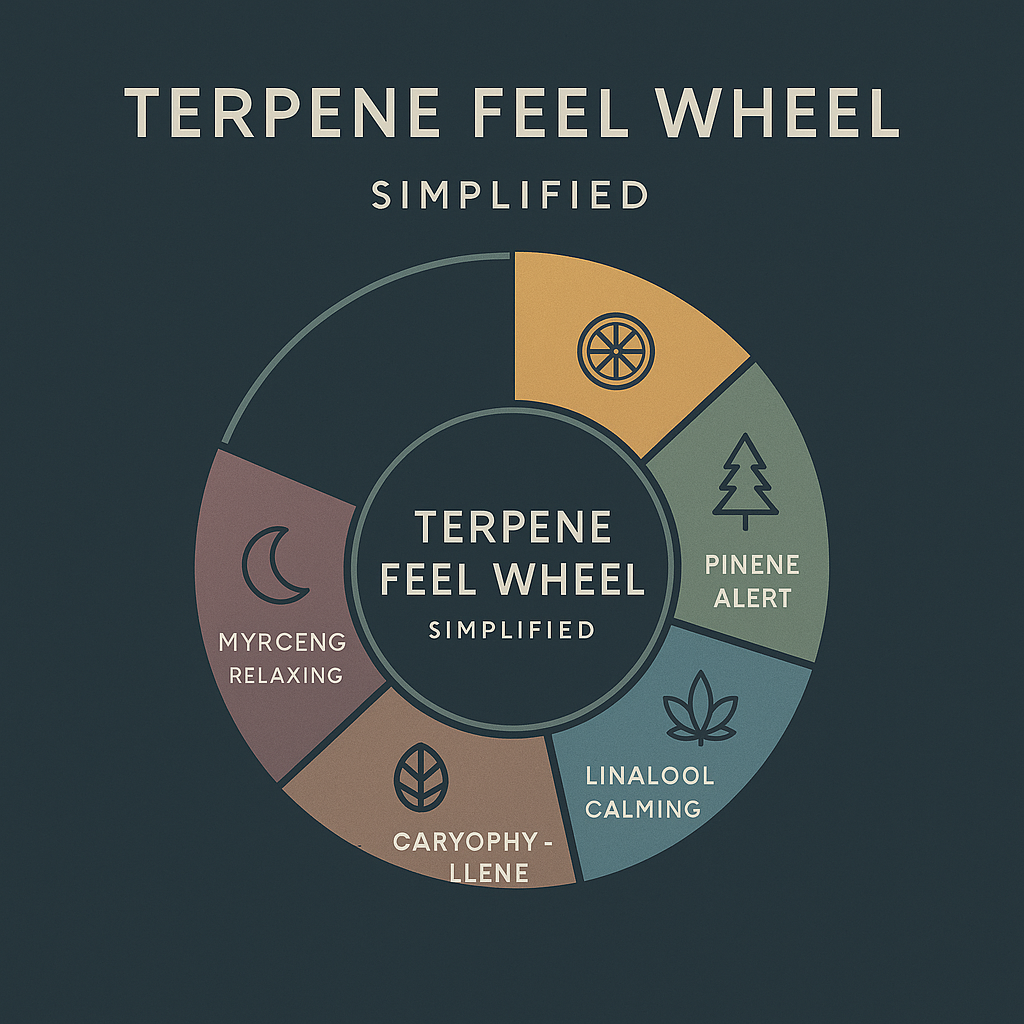
Use terpenes like flavour notes: they won’t dictate the entire experience, but they nudge it.
Method & Dose Matter More Than the Label
Inhalation (smoke/dry-herb vape): Onset in minutes, easier to “sip.” Great for testing how a strain feels at micro-doses. Start with one light inhale, wait 10 minutes.
Edibles: Long ramp (30–120 min) and long ride (4–8+ hours). Choose low THC to start (1–2.5 mg). Consider 1:1 THC:CBD for smoother edges. Don’t redose early.
Oils/Tinctures: More control than edibles; hold under tongue ~60 seconds. Good for sleep or steady daytime support at low doses.
A 3-Step, No-Regrets Selection Flow
Name your goal in one sentence (e.g., “I want to unwind after work without knocking myself out”).
Pick a ratio & terpene direction (e.g., 1–3 mg THC with some CBD; myrcene-forward).
Choose the label that matches the vibe (Indica for unwind, Sativa for lift, Hybrid if unsure). Start low, log the outcome, and adjust one piece at a time next time (ratio, terpene, method, or dose).
Common Mistakes (and Easy Fixes)
Chasing the label, ignoring the numbers.
Fix: Read THC/CBD per dose and look for dominant terpenes when listed.Starting too high.
Fix: For edibles, 1–2.5 mg THC is plenty. For inhalation, one light puff—wait—then reassess.Mixing methods.
Fix: On test days, pick one method so you can attribute effects correctly.Assuming yesterday = today.
Fix: Sleep, caffeine, and food change the experience. Keep brief session notes.
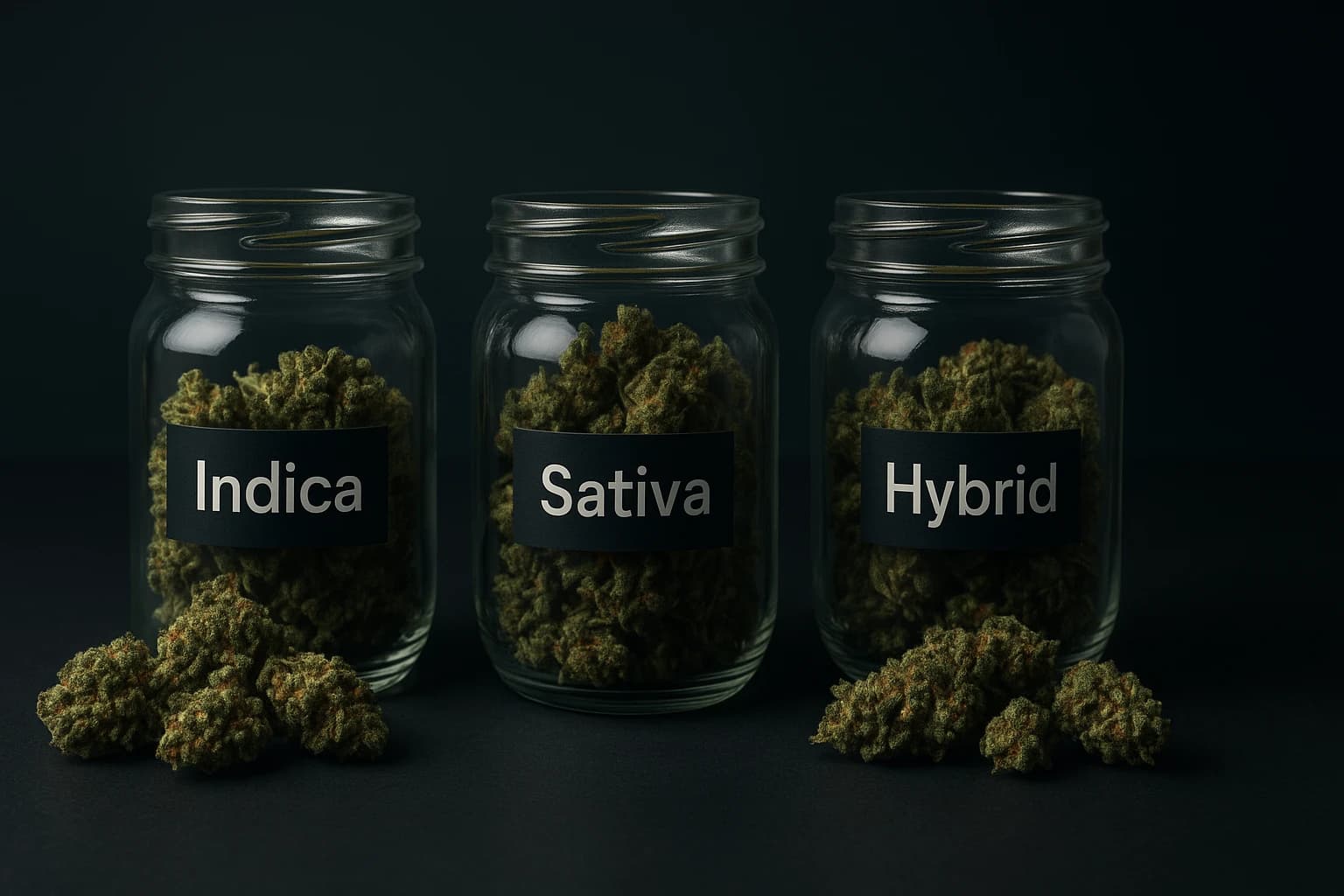
Image: Side-by-Side Buds (What You Might Notice)
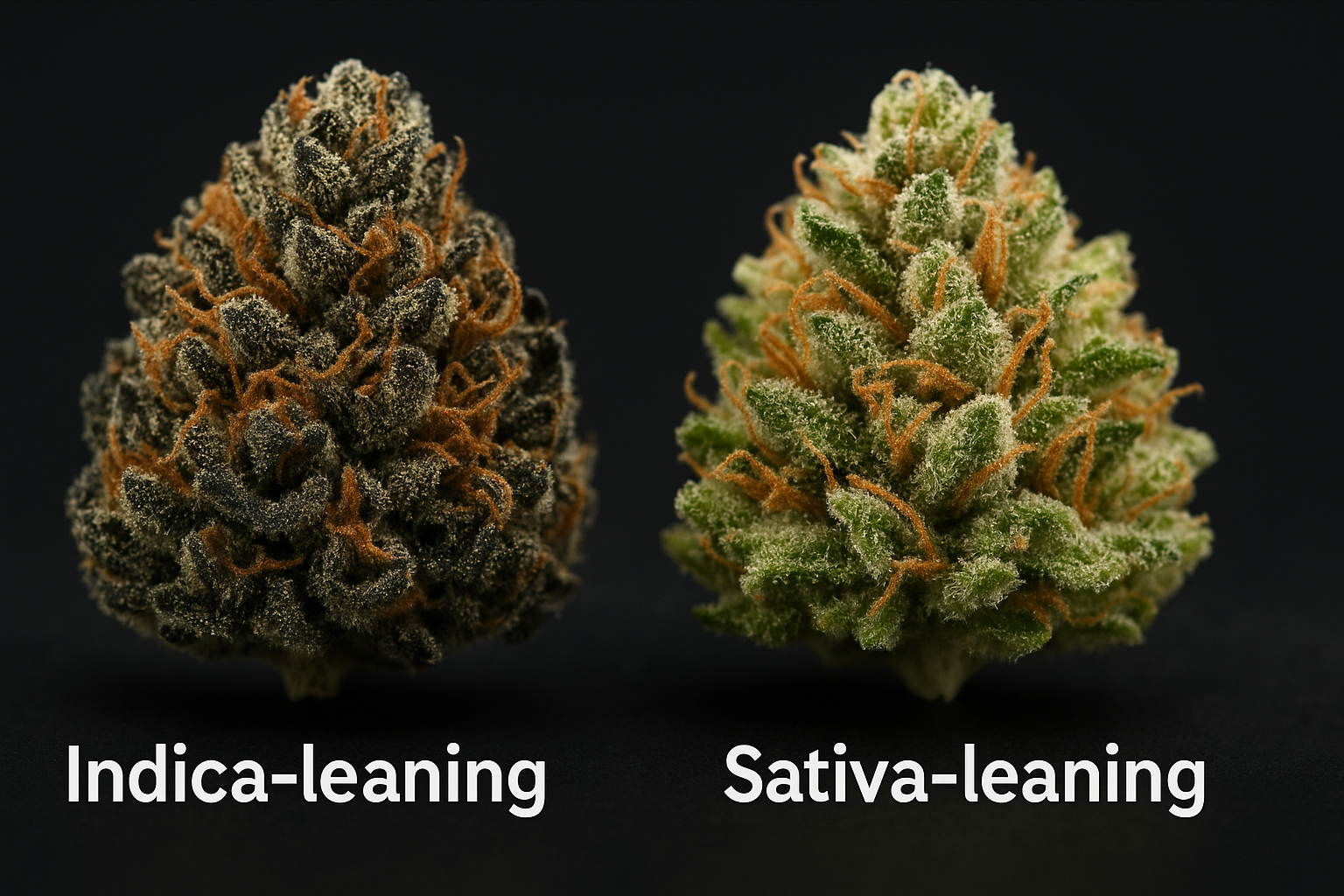
Appearance hints are fun, but effects live in the chemistry and your dose.
Quick FAQ
Is “Indica makes you sleepy, Sativa makes you energized” true?
Sometimes, for some people. It’s a useful shortcut, not a universal law. Chemistry and dose rule.
Are most strains hybrids now?
Yes. Breeding has mixed genetics widely. That’s why THC/CBD and terpenes are more reliable than the sticker.
What if labels don’t list terpenes?
Use THC/CBD plus your goal to choose; then evaluate experience and keep notes. Ask your retailer for terpene info when available.
What about “broad-spectrum” vs “isolate” in oils?
Broad-spectrum includes multiple plant compounds (terpenes, minor cannabinoids); isolate is pure CBD or THC. Beginners often prefer broad-spectrum low-dose for a gentler feel.
Bottom Line
Indica is your wind-down vibe, Sativa your brightness vibe, and Hybrid your flexible middle ground.
The best predictor of how you’ll feel is a combination of THC/CBD, dominant terpenes, method, and dose—not the label alone.
Start with your goal, choose a low dose, and keep simple notes. In two or three sessions, you’ll know exactly what your body prefers.
Keep Learning in The Green Guide
Cannabis 101: Everything First-Time Users in Canada Need to Know
Beginner’s Guide to Cannabis Dosage (with simple chart)
Understanding Terpenes: Why Your Weed Smells Like Citrus or Pine
Smoking vs Vaping: Health, Cost & Experience Compared
Editor’s note: This article supports responsible adult use in Canada and is not medical advice. Always follow current laws and product labels.