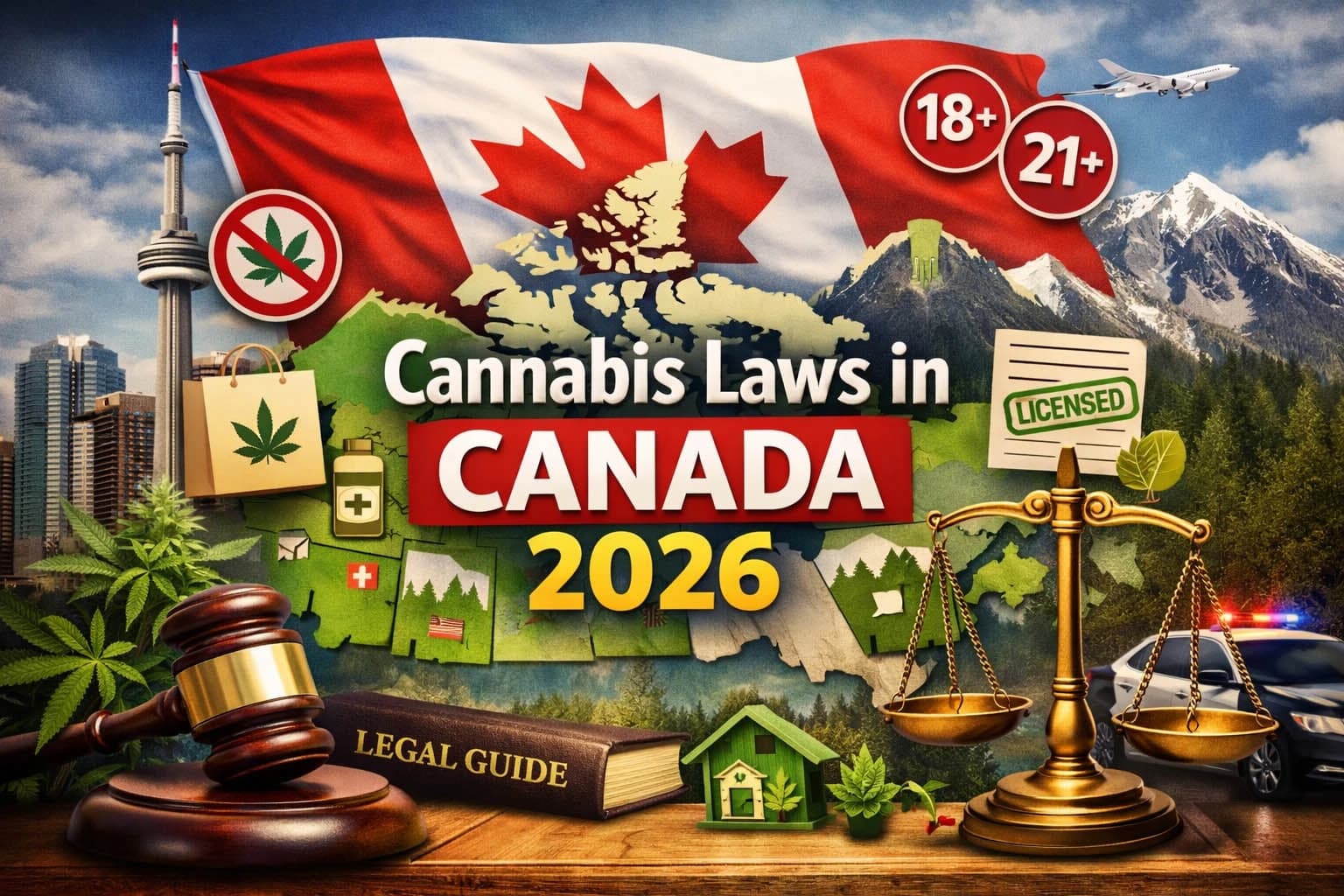
Quick disclaimer: This is educational info, not legal advice. Rules can change, and provinces/territories (and other countries) can add their own restrictions.
Cannabis is legal in Canada — but the moment travel enters the picture, things get more complicated than most people expect.
If you’ve ever packed a bag, paused at your nightstand, and wondered “Wait… can I bring this?”, you’re not alone. Airports, planes, provinces, and borders all come with different rules, and misunderstanding them can turn a simple trip into a stressful one very quickly.
This guide is here to make things simple.
No scare tactics.
No legal jargon.
Just a clear explanation of what you can do, what you can’t do, and how to travel without problems.
Cannabis in Canada: what “legal” actually means
Under Canadian federal law, adults can legally possess cannabis in public — up to 30 grams of dried cannabis, or its equivalent.
That “equivalent” part matters more than most people realize.
Cannabis doesn’t only come as dried flower. Edibles, vape cartridges, oils, capsules, and drinks all count toward the same possession limit, even if they look small or feel harmless.
If you’re unfamiliar with how different products fit into the rules, these glossary entries help clarify the basics:
The key takeaway is simple: legal does not mean unlimited, especially when you’re travelling.
Flying within Canada: yes, you can bring cannabis
If your flight starts and ends within Canada, you’re generally allowed to travel with cannabis.
That includes:
Carry-on luggage
Checked baggage
As long as:
You’re of legal age
You stay under the 30-gram dried-equivalent limit
You do not consume cannabis during travel
Cannabis is treated much like alcohol in this context. You can legally possess it, but airports and airplanes are not places where consumption is allowed.
If you’re within the rules, bringing cannabis through a Canadian airport on a domestic flight is usually uneventful.
Carry-on vs checked baggage: what makes the most sense
Legally, cannabis can go in either carry-on or checked luggage on domestic flights. Practically, some choices are easier than others.
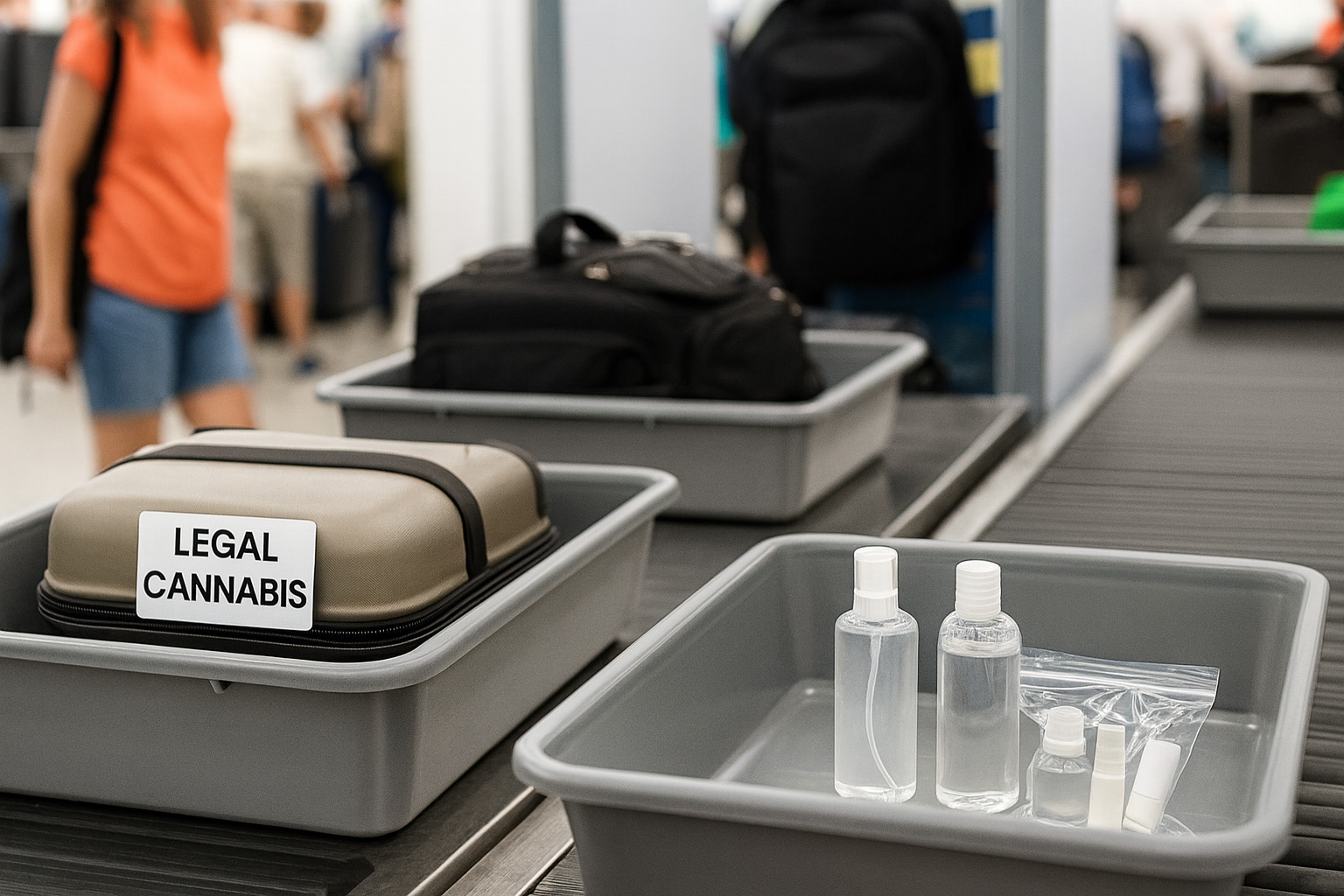
Solid products — such as dried flower or gummies — are straightforward in carry-on bags. Vape cartridges and pre-rolls are also fine if they’re sealed and packed sensibly.
Liquids are where travellers often get caught off guard. Cannabis oils, tinctures, sprays, and beverages are treated like any other liquid at airport security. That means standard carry-on liquid limits apply unless they’re packed in checked luggage.
If you want the smoothest experience possible, solid edibles or sealed flower tend to be the simplest option.
Travelling between provinces with cannabis
Yes — you can legally travel with cannabis between provinces.
Federal possession rules apply nationwide, but provinces still control things like:
Minimum legal age
Where cannabis can be consumed
Public use restrictions
That means something can be legal to carry but illegal to use in certain places once you arrive.
A good rule of thumb is to treat cannabis the same way you already treat alcohol: transport it legally, use it privately, and follow local rules at your destination.
Crossing borders: where the rules change completely
This is the most important part of the entire guide.
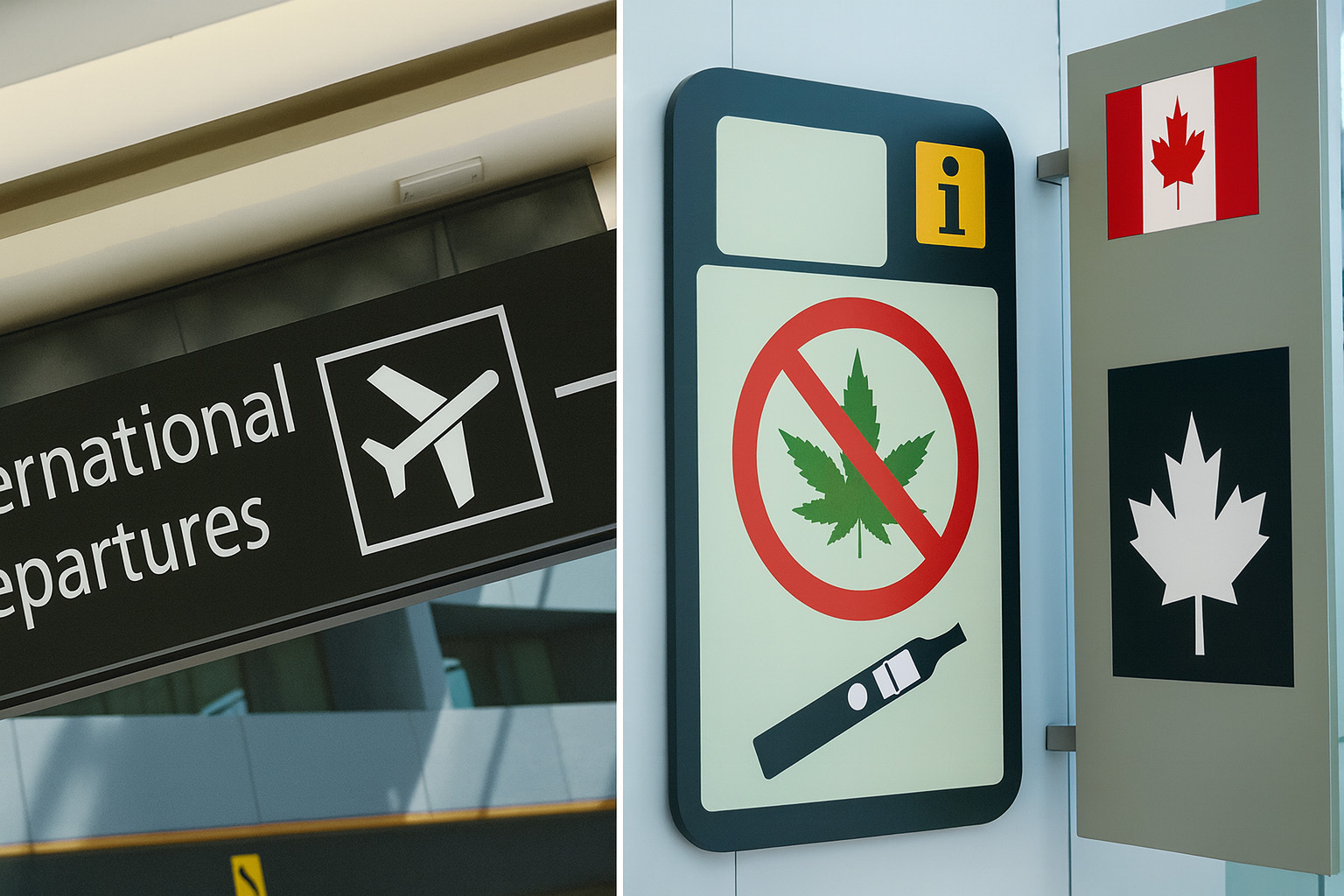
Do not take cannabis across international borders.
It doesn’t matter if you’re travelling to:
The United States
A country where cannabis is legal
A place you’ve bought cannabis before
Somewhere “just for a weekend”
International borders operate under federal border laws, not provincial or state laws. Once you cross that line, Canadian legalization no longer protects you.
This applies to all cannabis products — flower, edibles, vape cartridges, oils, and concentrates.
CBD is not a loophole
One of the most common travel mistakes is assuming CBD doesn’t count.
Under Canadian law, CBD is still cannabis.
CBD oils, gummies, vapes, and topicals are all subject to the same border restrictions as THC products. Even products labelled “THC-free” are not automatically legal to bring across international borders.
If you’re leaving Canada, the safest option is simple: don’t bring cannabis or CBD with you at all.
What about medical cannabis?
Medical authorization does not automatically make international travel with cannabis legal.
While rare exemptions exist, they require advance approval and specific documentation. For most travellers, the practical advice is straightforward:
If you’re travelling outside Canada, do not bring cannabis — medical or otherwise.
A smarter way to think about cannabis and travel
Cannabis should never be the most stressful part of your trip.
If you find yourself worrying about airport security, border questions, or whether something is allowed, the safest move is usually to leave it at home.
When travelling within Canada, follow possession limits and keep products sealed and discreet. When travelling abroad, avoid carrying cannabis entirely and research local laws only after you arrive.
If you’re staying in Canada and prefer not to travel with cannabis at all, you can always explore local options at your destination using tools like:
Frequently Asked Questions: Travelling With Cannabis in Canada
Can I bring cannabis on a plane in Canada?
Yes. On domestic flights within Canada, adults may carry up to 30 grams of dried cannabis (or equivalent) in carry-on or checked luggage. Consumption during travel is not allowed.
Can I bring edibles or cannabis drinks on a flight?
Yes, on domestic flights. Solid edibles are easiest. Oils and beverages must follow standard carry-on liquid rules or be packed in checked baggage.
Can I travel with cannabis between provinces?
Yes. Federal possession rules apply nationwide, though provincial rules around use may differ.
Can I take cannabis or CBD to the U.S.?
No. Crossing the border with cannabis or CBD is illegal, even if cannabis is legal where you’re going.
Is CBD treated differently than THC?
No. CBD is still considered cannabis under Canadian law and follows the same border restrictions.
Can I travel internationally with medical cannabis?
Usually not. Medical authorization does not automatically allow international travel with cannabis. Without special approval, don’t bring it.
Will airport security stop me for having cannabis?
On domestic flights, cannabis within legal limits is generally not an issue. Problems arise when limits are exceeded or cannabis appears during international travel.
What’s the safest way to travel with cannabis?
Keep it Canada-only, stay under possession limits, use sealed packaging, avoid liquids when possible, and never cross borders with it.
Final takeaway
Cannabis is legal in Canada — but travel changes the rules.
Domestic travel: usually fine
International travel: don’t do it
CBD included: yes
When in doubt: leave it at home
Boring travel is good travel.