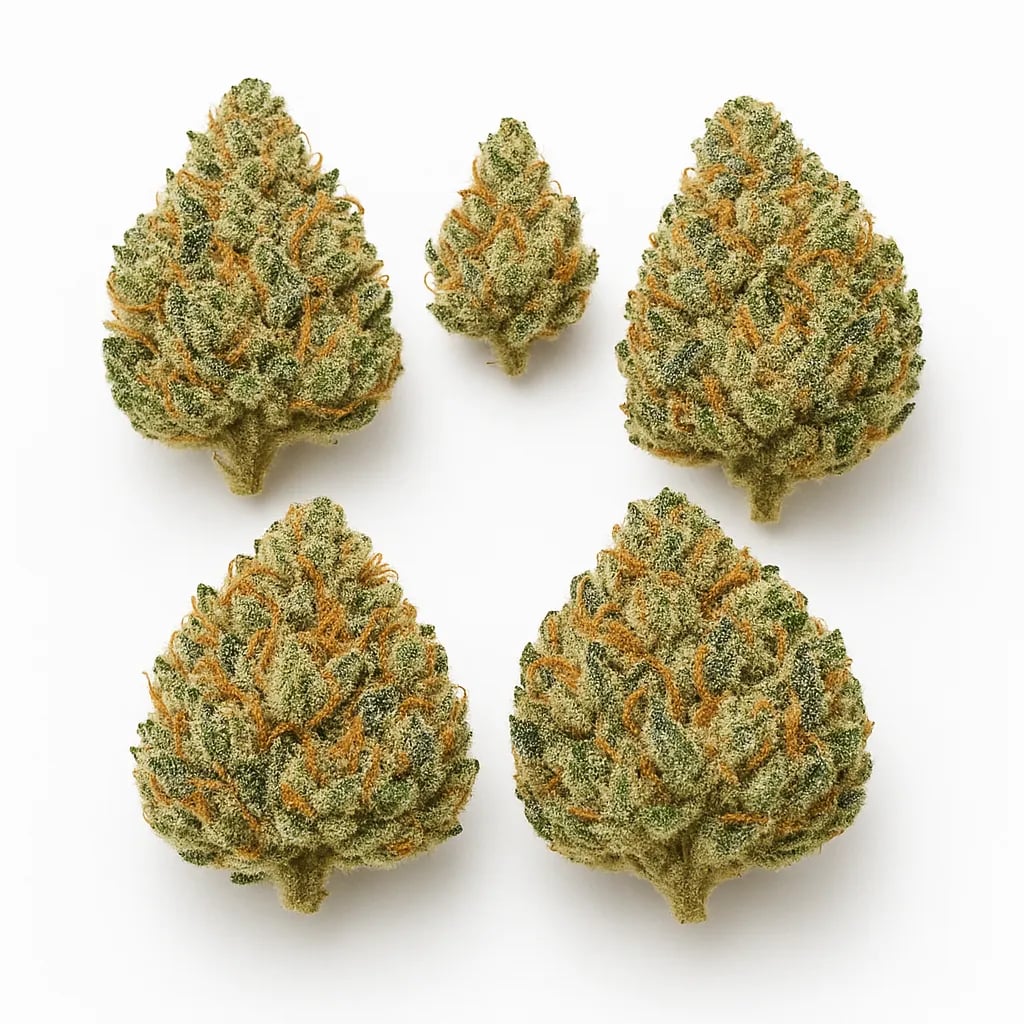
Candyland
Candyland is a sativa-leaning cultivar known for its bright, upbeat character and sweet, dessert-like flavour. Many users report an energizing, talkative experience that pairs well with daytime activities, creative tasks, and social settings.
Reported potency and effects can vary by cultivar, batch, and producer. Use this Canadian comparison profile as a guide, not medical advice.
Profile details
Reported Effects
Common Uses
Cannabinoids
THC: 21%
CBD: 0.5%
CBG: 0%
Genetics
Quick Facts
Type: Sativa
THC: Typically 18–24%
CBD: Typically 0–1%
Dominant Terpenes: Caryophyllene, Limonene, Myrcene, Pinene, Humulene
Flavors: Sweet candy, berry, grape, earthy, pine, spice
Effects: Uplifted mood, creative focus, sociable, energy boost, light body relaxation
Best For: Daytime sessions, creative work, social gatherings, light outdoor activities
Strain Effects
Inhaled Candyland is typically reported to come on fairly quickly, often within minutes, with an initial mental lift and a clear-headed, chatty vibe. Edible formats may take longer to onset. Many users describe steady, functional energy with a light body ease rather than heavy sedation.
Commonly reported side effects include dry mouth, dry eyes, dizziness, or feelings of anxiousness or paranoia at higher amounts. Effects may vary by person.
Flavor & Aroma
Candyland lives up to its name with a sweet, candy-like profile layered with berry and grape notes. Caryophyllene may lend a gentle peppery spice, while limonene can contribute a bright citrus lift. Subtle myrcene and pinene tones add earthy-pine accents, with sweetness most noticeable on the inhale and a lightly herbal finish on the exhale.
Genetics & Lineage
Candyland is widely reported as a cross of Granddaddy Purple and Platinum Cookies (often listed as Bay Platinum Cookies). Credited to Ken Estes in the San Francisco Bay Area, this lineage blends the grape-influenced sweetness and bag appeal associated with GDP with the dessert-like aromatics and uplifting character from the Cookies family.
Growing Information
Difficulty: Moderate; responds well to training and canopy management
Flowering Time: About 8–9 weeks indoors; early to mid-October outdoors (Northern Hemisphere)
Yield: Medium to high (approximately 450–550 g/m² indoors; 400–600 g/plant outdoors, conditions dependent)
Ideal Conditions: Warm, relatively dry climate; stable airflow; moderate feeding; RH around 45–55% in late flower; strong light intensity
Plant Traits: Sativa-leaning stretch; dense, sugar-coated buds; potential purple hues in cooler nights; thrives with topping, LST, and SCROG
Medical Uses (Optional)
Some Canadian consumers choose Candyland when looking to unwind from everyday stress, maintain a positive outlook, stay engaged and focused during the day, or feel more at ease in social settings. This is user-reported information and not medical advice.
Strain FAQs
Q: Is Candyland a sativa or an indica?
A: Candyland is commonly described as a sativa-leaning cultivar, known for its energetic and social profile.
Q: What does Candyland taste like?
A: Many users report sweet candy and berry flavours with a touch of grape, balanced by earthy-pine and mild spice.
Q: What are typical THC levels for Candyland?
A: It is often found in the 18–24% THC range, with low CBD.
Q: Is Candyland good for daytime use?
A: It is typically chosen for daytime activities due to its reported uplifting and functional feel, though individual responses vary.
Q: How long does Candyland take to flower?
A: Indoors, many growers report a flowering time of about 8–9 weeks, depending on phenotype and environment.
Why Choose Candyland
Candyland stands out for its sweet, candy-like flavour and upbeat, social energy that many users find suitable for daytime. It is a strong fit for consumers who enjoy bright sativa profiles and expressive terpene-driven aromatics. If you are seeking a lively, flavour-forward option for creative or social sessions, Candyland offers a balanced experience without heavy sedation.